
Penetration testing—or ethical hacking—is one of the most sought-after cybersecurity career paths you can pursue right now, and the demand is growing fastest in Malaysia and Singapore. As organizations across Southeast Asia push deeper into digital transformation, the need for skilled offensive security professionals has gone from strong to critical. Malaysia originally targeted 25,000 cybersecurity professionals by the end of 2025, but in 2023 the country had only around 15,248 on record—a gap that hasn’t fully closed. Singapore tells a similar story: its cyber job market stays consistently active, with over 1,600 open cybersecurity positions at any given time.
This guide maps out a realistic path into penetration testing in both countries. We’ll cover education routes, the certifications that actually matter (OSCP, CEH, CREST), the tools you need to get hands-on with (Kali Linux, Burp Suite, Metasploit), and what you can realistically earn in MYR and SGD. We’ll also walk through the practical side: building experience through CTFs, bug bounties, and home labs. Whether you’re a student entering the field or a professional looking to pivot, this 2026 guide gives you a concrete plan to work from.
Why Choose a Penetration Testing Career in 2026?
Explosive Regional Demand: Southeast Asia’s cybersecurity hiring market is moving fast, and penetration testers are right at the front of that demand. As cloud adoption deepens and organizations become more digitally interconnected, the attack surface expands—and so does the need for professionals who can find the gaps before attackers do. Malaysia’s original target of 25,000 cybersecurity professionals by 2025 has since been revised upward to 27,000, and the gap between ambition and actual workforce still remains wide. Singapore faces the same pressure: 92% of organizations in the region have experienced breaches in recent years, with talent shortages cited as a core contributing factor. Finance, healthcare, and telecoms are all actively hiring. For you, this means demand is running well ahead of supply—and junior pentesters with the right fundamentals can move quickly.
Government and Industry Backing: Both governments are putting real weight behind cybersecurity talent development. Malaysia has enacted the Cyber Security Act 2024 and built out the National Cybersecurity Policy and Digital Transformation Plan—all of which create a steady demand for compliance-focused security assessments. The Communications Ministry’s Cybersecurity Centre of Excellence and CyberSecurity Malaysia’s training programs provide structured pathways into hands-on cyber roles. In Singapore, the Cyber Security Agency (CSA) leads the SG Cyber Talent initiative, with programs like the Youth Cyber Exploration Programme (YCEP) building early-stage interest and the Cyber Security Associates and Technologists (CSAT) scheme helping mid-career professionals transition in. This institutional support means the ecosystem around you is actively trying to produce more professionals—which includes creating hiring pipelines you can step into.
Competitive Pay and Strong Career Trajectory: Penetration testing is intellectually engaging work—and it pays well. In Malaysia, entry-level roles offer a solid starting point (full ranges are in the Salary section below), with experienced consultants earning significantly more as they specialize. Singapore’s more mature market compensates accordingly: entry-level cybersecurity roles typically start around SGD $70K per year (roughly $5,800/month), while senior specialists and technical leads regularly command SGD $200K–$300K. The salary curve is steep for those who develop real depth in high-demand areas like cloud penetration testing or Active Directory exploitation.
Insight: Remote and hybrid work has permanently fragmented the traditional corporate perimeter. With employees connecting from home networks, personal devices, and third-party environments, the attack surface is vastly larger than it was five years ago—and organizations need pentesters to validate both external and internal defenses on an ongoing basis.
Education Paths - Degrees, Courses, and Bootcamps
There’s no single correct path into penetration testing. Formal degrees are one route, but a large portion of the industry is made up of self-taught professionals or people who transitioned from adjacent IT roles.
-
University Degrees in Cybersecurity or IT: A bachelor’s degree in Computer Science, Information Security, or a related field gives you solid theoretical grounding and helps with the initial HR screening process. In Malaysia, institutions like the University of Malaya (UM), Universiti Teknologi Malaysia (UTM), Universiti Sains Malaysia (USM), Asia Pacific University (APU), and Multimedia University (MMU) offer dedicated cybersecurity tracks covering networking, cryptography, and secure architecture. In Singapore, NUS and NTU offer rigorous InfoSec programs, and the Singapore Institute of Technology (SIT) and Singapore Management University (SMU) provide more specialized security degrees. A degree isn’t a hard requirement to break in, but it does smooth the path for fresh graduates who haven’t yet built a portfolio.
-
Cybersecurity Bootcamps and Certification Courses: For those skipping the four-year degree route, intensive bootcamps offer a focused, practical alternative. In Singapore, Vertical Institute and ThriveDX run solid ethical hacking bootcamps, and the SANS Institute offers premium technical training. Polytechnics also provide specialist diplomas in cybersecurity. In Malaysia, Nexperts Academy’s Cyber Security Bootcamp provides concentrated hands-on training, while CyberSecurity Malaysia offers accessible courses through its CyberGuru platform. Entry-level certificates like the Google Cybersecurity Professional Certificate are a reasonable starting point. That said, always evaluate a bootcamp’s curriculum depth and graduate employment outcomes before committing.
-
Online Courses and Self-Learning: Offensive security rewards self-driven learners. Platforms like TryHackMe, Hack The Box, and INE offer hands-on labs that walk you through real exploitation techniques. Hiring managers in this field often care more about what you can demonstrate than what credentials you hold. If you can confidently root a machine and explain your methodology clearly, that carries real weight. For a structured starting point, see our Beginner’s Guide to Penetration Testing.
Tip: No matter how you enter the field, continuous self-learning is non-negotiable. The threat landscape changes constantly. Building a home lab, working through CTF challenges, and reading security write-ups regularly aren’t optional extras—they’re core habits for anyone serious about a pentesting career.
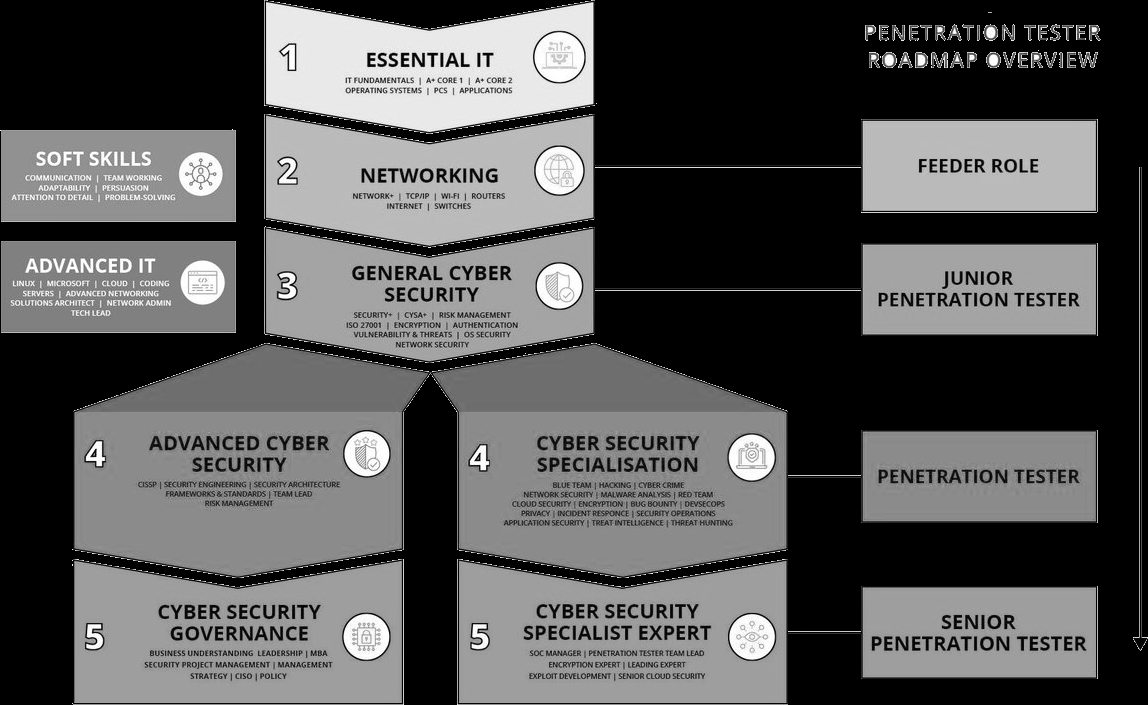
Credit: [StationX]
Certifications: Boost Your Credibility
Practical skill is what makes you effective, but certifications are what get you past the HR filter—especially for entry-level roles where you don’t yet have years of professional experience. In Malaysia and Singapore, 94% of organizations strongly prefer candidates with recognized cybersecurity certifications. A well-chosen cert signals to a recruiter that you’ve met an industry-recognized baseline. Here’s a breakdown of the most relevant certifications for a penetration testing career path:
This roadmap organizes certifications into domains, skill levels (Expert, Intermediate, Beginner), and relevant sub-domains.
481 certifications listed | July 2024
✨ Communication and Network Security
The communication and network security domain covers the ability to secure communication channels and networks. Topics include secure and converged protocols, wireless networks, cellular networks, hardware operation (warranty and redundant power) and third-party connectivity. IP networking (IPSec, IPv4 and IPv6) are also included in this domain.
Expert
- CCIE Sec (Cisco Certified Implementation Expert - Security -
$2,050 Hands-on Lab, $12,000 est Travel cost) - CCIE Ent (Cisco Certified Internetwork Expert - Enterprise Infrastructure -
~$2,050 hands-on lab, ~$12,000 in travel costs) - JNCIE Sec (Juniper Networks Certified Internet Expert, Security -
$1,400 Hands-on Lab) - CCDE (Cisco Certified Design Expert -
~$1,600 written exam with hands-on lab) - FCX (Fortinet Certified Expert -
$400 written exam, $1600 in-person lab)
Intermediate
- CCNP Sec (Cisco Certified Network Professional - Security -
~$1,200 exam) - JNCIP Sec (Juniper Networks Certified Internet Professional, Security -
$400 exam) - PCNSE (Palo Alto Networks Certified Network Security Engineer -
$175 exam) - FCSS ZTA (Fortinet Certified Solution Specialist - Zero Trust Access -
$800 two exams) - F5 CSE Sec (F5 Big-IP Certified Solution Expert - Security -
$135 exam) - CCNP Ent (Cisco Certified Network Professional - Enterprise -
~$600 exam) - CCSM (Checkpoint Certified Security Master -
$350 exam) - PCSAE (Palo Alto Certified Cloud Security Automation Engineer -
$350 exam) - PCCSE (Prisma Certified Cloud Security Engineer -
$350 exam) - FCSS NS (Fortinet Certificed Solution Specialist - Network Security -
$800 two exams) - CCSE (Checkpoint Certified Security Expert -
$250 exam) - JNCIS Sec (Juniper Networks Certified Internet Specialist, Security -
$300 exam) - F5 CTS APM (F5 Big-IP Certified Technical Specialist - Access Policy Manager -
$135 exam) - FCP NS (Fortinet Certified Professional - Network Security -
$400 for 2 exams) - CCNA (Cisco Certified Network Associate -
~$330 exam) - F5 CTS DNS (F5 Big-IP Certified Technical Specialist - Domain Name Services -
$135 exam) - PCDRA (Palo Alto Networks Certified Detection and Remediation Analyst -
$155 exam) - CWSP (CWNP Certified Wireless Security Professional -
$325 exam) - CREST CCNIA (CREST Certified Network Intrusion Analyst -
$2,481 exam & essay, Hands on exam in UK)
Beginner
- F5 CA (F5 Big-IP Certified Administrator -
$135 exam) - eNDP (eLearnSecurity Network Defense Professional -
$400 exam) - MNSE (Mosse Institute Network Security Essentials -
$450 certification programme, 100% practical. No expiry.) - PCNSA (Palo Alto Networks Certified Network Security Administrator -
$155 exam) - OWSE (ISECOM OSSTMM Wireless Security Expert -
$100 annual sub, Unknown exam cost) - JNCIA Sec (Juniper Networks Certified Internet Associate, Security -
$200 exam) - FCA (Fortinet Certificed Associate -
Free course and exam required) - WCNA (Protocol Analysis Institute Wireshark Certified Network Analyst -
$299 exam) - CCSA (Checkpoint Certified Security Administrator -
$250 exam) - ITS-NS (Certiport IT Specialist - Network Security -
$127 exam) - CCT (Cisco Certified Technician -
$165 exam) - SOG NSP (SecOps Group Certified Network Security Practitioner -
$249 exam) - Net+ (CompTIA Network+ -
$369 exam) - FCF (Fortinet Certified Fundamentals Cybersecurity -
Free 3 courses with exams req) - PCCET (Palo Alto Networks Certified Cybersecurity Entry-level Technician -
$110 exam)
✨ IAM (Identity and Access Management)
(The identity and access management domain covers the attacks that target the human gateway to gain access to data. Other topics include ways to identify users with rights to access the information and servers. Identify and access management covers the topics of applications, Single sign-on authentication, privilege escalation, Kerberos, rule-based or risk-based access control, proofing and establishment of identity.)
Intermediate
- CIMP (Identify Management Institute Certified Identity Management Professional -
$295 + Membership) - FCSS SASE (Fortinet Certified Solution Specialist - Secure Access Service Edge -
$800 two exams) - CIAM (Identify Management Institute Certified Identify and Access Manager -
$390 Exam) - CIDPRO (IDPro Certified Identity Professional -
$700 exam) - SF CIAMD (SalesForce Certified Identity and Access Management Designer -
$400 exam) - CIGE (IMI Certified Identity Governance Expert -
$395 exam)
Beginner
- CIST (IMI Certfied Identity and Security Technologist -
$295 exam) - SC-300 (Microsoft Certfied: Identity and Access Administrator Associate -
$165 exam) - CAMS (IMI Certfied Access Management Specialist -
$195 exam) - SC-900 (Microsoft Certified: Security, Compliance, and Identity Fundamentals -
$99 exam)
✨ Security Architecture and Engineering
(The security architecture and engineering domain covers important topics concering security engineering plans, designs, and principles. Topics include assessing and mitigating information system vulnerabilities, fundamental concepts of security models and security architectures in critical areas like access control. Cloud systems, cryptography, system infiltrations (ransomware, fault-injection and more) and virtualized systems are also covered in this domain.)
Expert
Cloud/SysOps
- VCDX DCV (VMware Certified Design Expert in Datacenter Virtualization-
$3,995 exams, Application also req.) - VCIX DCV (VMware Certified Implementation Expert in DatacenterVirtualization -
$900 two exams) - AWS SAP (Amazon Web Services CertifiedSolutions Architect - Professional -
$300 exam) - AZ-305(Microsoft Azure Solutions Architect Expert -
$330 exam) - VCIX NV (VMware Certified Implementation Expert in NetworkVirtualization -
$900 two exams) - Google PCSA(Google Professional Cloud Architect -
$200 exam)
*nix
- RHCA (Red HatCertified Architect -
~$3,745 exam, plus travel) - RHCE (Red HatCertified Engineer -
$400 exam) - LPIC-3(Linux Professional Institute Certified: 303 Security -
$200 exam) - SCE (SUSE CertifiedEngineer -
$195 practical exam)
ICS/IoT
- ISA CE (ISACybersecurity Expert -
$2,700 course + exam, Course required) - CACE (Excida IEC 62443 CertifiedAutomation Cybersecurity Expert -
$700 exam)
General Engineering
- CREST CRTSA (CREST Registered TechnicalSecurity Architect -
$2,300 two exams, In person in the UK) - SABSA SCM (SABSA Chartered SecurityArchitect - Master Certificate -
$3,750 exam & thesis, Branded courserequired) - GDAT(GIAC Defending Advanced Threats -
$979 exam, SANS course recommended) - SC-100(Microsoft Cybersecurity Architect -
$165 exam) - SABSA SCP (SABSA Chartered SecurityArchitect - Practitioner Certificate -
$3,750 written exam, Branded courserequired) - GDSA (GIAC Defensible SecurityArchitecture -
$979 exam, SANS course recommended)
Intermediate
Cloud/SysOps
- FCSS PCS (Fortinet Certified Solution Specialist -Public Cloud Security -
$400 exam) - GCTD(GIAC Cloud Threat Detection -
$979 exam, SANS course recommended) - MS-100 (Microsoft 365 Certified EnterpriseAdministrator Expert -
$165 exam) - GPCS(GIAC Public Cloud Security -
$979 exam, SANS course recommended) - GCSA(GIAC Cloud Security Automation -
$979 exam, SANS course recommended) - FCSS SO (Fortinet Certified Solution Specialist -Security Operations -
$400 exam) - PDSO CDE(PDSO Certified DevSecOps Expert -
$1199, Exam and training bundled) - VCP DCV (VMware Certified Professional in Datacenter Virtualization -
$375exam, Branded course required) - CCSP ((ISC)2 Certified CloudSecurity Professional -
$599 exam) - FCP PCS (Fortinet Certified Professional - PublicCloud Security -
$400 for 2 exams) - AWS CSS(Amazon Web Services Certified Security - Specialty -
$150 exam) - SFCCCC(SalesForce Certified Community Cloud Consultant -
$200 exam, Must beSalesForce Admin Certified) - EXIN PCSA (EXIN Professional CloudSolution Architect -
$315 exam) - VCP NV (VMware Certified Professional in Network Virtualization-
$375 exam, Branded course required) - AZ-500 (MicrosoftAzure Security Engineer Associate -
$165 exam) - CSA CGC (Cloud Security Alliance CloudGovernance & Compliance -
$315 exam) - GCLD (GIAC Cloud Security Essentials -
$979exam SANS course recommended) - AWS SAA (Amazon Web Services CertifiedSolutions Architect - Associate -
$150 exam) - EXIN PCSerM (EXIN Professional CloudService Manager -
$315 exam)
*nix
- GCWN (GIAC Certified WindowsSecurity Administrator -
$979 exam, SANS course recommended) - CKS (Cloud Native ComputingFoundation Certified Kubernetes Security Specialist -
$375 lab, Brandedcourse required) - LFCS (Linux Foundation CertifiedSystem Administrator -
$300 exam) - FCP SO (Fortinet Certified Professional - SecurityOperations -
$400 for 2 exams) - RHCSA (Red HatCertified System Administrator -
$400 exam) - CKA (Cloud Native ComputingFoundation Certified Kubernetes Administrator -
$375 lab, Branded courserequired) - LPIC-2 (LinuxProfessional Institute Certified: Linux Engineer -
$400 2 exams)
ICS/IoT
- GRID (GIAC Response and Industrial Defense -
$979 exam, SANS course encouraged) - CSSA(Infosec Institute Certified SCADA Security Architect -
$4,599 exam, Courserequired) - ISA CDS (ISA Certified DesignSpecialist -
$2,700 course + exam) - TUV COTCP(TUV Rheinland Certified Operational Technology Cybersecurity Professional(GERMAN) -
$415 exam) - GCIP (GIAC Critical InfrastructureProtection -
$979 exam, SANS course encouraged) - ISA CRAS (ISA Certified RiskAssesment Specialist -
$2,700 course + exam, Course required)
General Engineering
- CIS LI (IBITGQ CertifiedISO 27001 Information Security Management Specialist Lead Implementer -
$2008 course exam, Branded course required) - SFCTA (SalesforceCertified Technical Architect -
$6000, Must be SF SA Certified) - SABSA SCF (SABSA Chartered Security Architect- Foundation Certificate -
$3,750 exam, Branded course required) - SPLK-3001 (Splunk Enterprise Security CertifiedAdministrator -
$130 exam, Branded course recommended) - SFSA (SalesForceSystem Architect -
$400 hands-on lab) - CCSE (ECCouncil Certified Cloud Security Engineer -
$100 exam, EC Council CourseRecommended) - MCSE (Mosse Institute Cloud SecurityEngineer -
$600 exam)
Beginner
Cloud/SysOps
- Google PCSE (Google Professional Cloud Security Engineer -
$200 exam) - EXIN PCSM (EXIN Professional CloudSecurity Manager -
$315 exam) - MDSO (Mosse Institute Certified DevSecOpsEngineer -
$450 exam) - CSA CCSK (Cloud SecurityAlliance Certificate of Cloud Security Knowledge -
$395 exam) - C)CSO (Mile2 Certified Cloud SecurityOfficer -
$550 exam) - Server+ (CompTIA Server+-
$319 exam) - PDSO CDP (PDSO Certified DevSecOps Professional -
$799, Exam and training bundled) - EXIN PCD (EXIN Professional Cloud Developer -
$315 exam) - Cloud+ (CompTIA Cloud+ -
$369 exam) - Google ACE(Google Associate Cloud Engineer -
$125 exam) - SOG CCSP-AWS (SecOps Group CertifiedCloud Security Practitioner - AWS -
$249 exam) - AWS CP(Amazon Web Services Certified Cloud Practitioner -
$100 exam) - EXIN PCA (EXIN Professional CloudAdministrator -
$315 exam) - Cloud Essnt(CompTIA Cloud Essentials -
$138 exam)
*nix
- SCA (SUSE CertifiedAdministrator -
$149 exam) - DCA (Docker CertifiedAssociate -
$195 exam) - LPIC-1 (LinuxProfessional Institute Certified: Linux Administrator -
$400 2 exams) - KCNA (Cloud Native ComputingFoundation Kubernetes and Cloud Native Associate -
$250 exam, Brandedcourse required) - Linux+ (CompTIA Linux+ -
$369 exam) - LFCA(Linux Foundation Certified IT Associate -
$200 exam) - Apple ACSP (Apple CertifiedSupport Professional -
$250 exam, Limited test locations) - A+ (CompTIA A+ -
$253 exam)
ICS/IoT
- ISA CAP (ISA CertifiedAutomation Specialist -
$467 exam) - TUV COSM (TUV Certified OTSecurity Manager -
$3,070 Course) - GICSP (GIAC Global IndustrialSecurity Professional -
$979 exam, SANS course encouraged) - AZ-220(Azure IoT Developer Specialty -
$165 exam) - ISA CFS (ISA CertifiedFundamentals Specialist -
$2,700 course + exam, Course required) - EITCA/IS (EITCA/ISInformation Security Certificate -
$120 exam) - CACS (Excida IEC 62443 CertifiedAutomation Cybersecurity Specialist -
$700 exam) - TUV COSP (TUV Certified OTSecurity Practitioner -
$2725 course) - CIOTSP (CertNexus CertifiedInternet of Things Security Practitioner -
$250 exam)
General Engineering
✨ Asset Security
(The Asset Security domain deals with the issues related to the collection, storage, maintenance, retention and destruction of data. It also covers knowledge of different roles regarding data handling (owner, controller and custodian) as well as data protection methods and data states. Other topics include resource provision, asset classification and data lifecycle management.)
Expert
- ASIS CPP (ASIS Certified Protection Professional -
$485 exam)
Intermediate
- CIPT (IAPP Certified Information Privacy Technologist -
$550 exam) - CDPSE (ISACA Certified Data Privacy Solutions Engineer -
$880 Application) - EPDPP (EXIN Privacy and Data Protection Practitioner -
$243 Exam, Course req'd) - CIPA (IMI Certified Identity Protection -
$295 Exam) - DCPP (DSCI Certified Privacy Professional -
$205 Exam) - CIMP (IMI Certified Identity Management Professional -
$295 Exam) - CDP (IMI Certified in Data Protection -
$395 Exam)
Beginner
- ASIS APP (ASIS Associate Protection Professional -
$350 exam) - CRFS (IMI Certified Red Flag Specialist -
$295 exam) - CIPP (IAPP Certified Information Privacy Professional -
$550 exam) - EPDPF (EXIN Privacy and Data Protection Foundation -
$207 exam) - EPDPE (EXIN Privacy and Data Protection Essentials -
$145 exam)
✨ Security and Risk Management
(The security and risk management domain covers general on skills related to the implementation of user awareness programs as well as security procedures. Emphasis is also placed on risk management concerning the acquisition of new services, hardware and software (supply chain). Other skills include social engineering defense mechanisms.)
Expert
- ITIL Master (ITIL Master -
$4,000 Interview) - GSE (GIAC Security Expert -
~$7475 for 10 exams) - PgMP (PMI Program Management Professional -
$1,000 exam) - CISSP Concentrations ((ISC)2 Certified Information Systems Security Professional Concentrations -
$599 exam) - NCSC CCPLP (NCSC Certified Cybersecurity Professional - Lead Practitioner -
$1388 interview) - Zach EAPro (Zachman Enterprise Architect Professional (Level 3) -
$2,999 exam & case study, Level 1 & 2 cert not req'd) - PMP (PMI Project Management Professional -
$555 exam) - CISM (ISACA Certified Information Security Manager -
$760 exam) - S-ISME (SECO Information Security Management Expert -
$850 exam) - NCSC CCPSP (NCSC Certified Cybersecurity Professional - Senior Practitioner -
$907 interview) - CISSP ((ISC)2 Certified Information Systems Security Professional -
$749 exam) - TOGAF (OpenGroup TOGAF Certified -
$360 exam) - CCISO (EC Council Certified Information Security Officer -
$3,150 course exam, Branded course required) - EEXIN ISM (EXIN Information Security Management Expert -
EST $799 oral exam) - GSTRT (GIAC Strategic Planning, Policy and Leadership -
$979 exam, SANS course recommended) - NCSC CCPP (NCSC Certified Cybersecurity Professional - Practitioner -
$225 interview) - PSM III (Scrum.org Professional Scrum Master III -
$500 exam, Branded course required) - GSP (GIAC Security Professional -
~$3735 for 5 exams) - GISP (GIAC Information Security Professional -
$979 exam, SANS course recommended)
Intermediate
GRC (Governance, Risk, and Compliance) & General Management
- ITIL SL (ITIL Strategic Leader -
$4,800 two courseexams, 2 branded courses required) - Zach EAP (Zachman Enterprise Architect Practitioner (Level 2) -
$2,999 exam & case study, Level 1 cert not req'd) - GSLC (GIAC Security LeadershipCertification -
$979 exam, SANS course recommended) - S-CISO (SECO Certified InformationSecurity Officer -
Resume review) - CASP+ (CompTIA Advanced SecurityPractitioner+ -
$509 exam) - ITIL MP (ITIL Managing Professional -
$9,600 4course exams, 4 branded courses requires) - Scrum SPS(Scrum Scaled Professional Scrum -
$250 exam) - GLEG (GIAC Law of Data Security &Investigations -
$979 exam, SANS course recommended) - CISSM (GAQMCertified Information Systems Security Manager -
$170 exam) - CGRC ((ISC)2 Certified inGovernance, Risk and Compliance -
$599 exam) - CRISC (ISACA Certified inRisk and Information Systems Control -
$760 exam) - CSM (GAQM Certified ScrumMaster -
$128 exam) - CASM (GAQM Certified AgileScrum Master -
$128 exam) - CM)ISSO (Mile2 Certified MasterInformation Systems Security Officer -
Complete C)SP, C)ISSO, C)ISSM andIS20 ($2200)) - S-ISP (SECO Information SecurityPractitioner -
$550) - Scrum PSD (Scrum Professional ScrumDeveloper -
$200 exam) - GCPM (GIAC Certified ProjectManager -
$979 exam, SANS course recommended) - BCS PCIRM (BCSPractitioner Certificate in Information Risk Management -
$287 exam) - PEXIN ISM (EXINInformation Security Management Professional -
$268 exam) - MGRC (Mosse Institute Certified GRC ExpertCertification -
$450 certification programme, 100% practical. No expiry.) - M_o_R P (Axelos M_o_R Practitioner Risk Management -
$560 exam) - CPD (GAQM CertifiedProject Director -
$210 exam) - PMI ACP (PMI Agile CertifiedPractitioner -
$495 exam) - EISM (EC CouncilInformation Security Manager -
$3,499, Branded course required) - CGEIT (ISACA Certified in theGovernance of Enterprise IT -
$760 exam) - EXIN 27001E (EXIN ISO/IEC 27001 Expert -
~$379 OralPresentation) - PECB 27005LM (PECB ISO/IEC 27005 Lead RiskManager -
~$1,595 exam, Course required) - DCCRP (DRI Certified Cyber ResilienceProfessional -
$400 Exam) - Scrum PAL (Scrum Professional AgileLeadership -
$200 exam) - CAPM (PMICertified Associate in Project Management -
$300 exam) - PSM II (Scrum.org Professional ScrumMaster II -
$250 exam) - APMG 20000P (APMG ISO/IEC20000 Practitioner -
$308 Exam, Foundation or ITIL req'd) - C)ISRM (Mile2Certified Information Systems Risk Manager -
$550 exam) - APMG 27001P (APMG ISO/IEC27001 Practitioner -
$400 exam, Application essay) - PECB 27001LI (PECB ISO/IEC 27001 LeadImplementer -
$930 exam, Course required) - Programming Language (Learning a programminglanguage is valuable to any IT professionals career. Recommendations:Python, Ruby, C++)
- CCP (EC First Certified CCMC Professional -
$2,995 exam, Courserequired) - C)ISSO (Mile2 Certified InformationSystems Security Officer -
$550 exam) - CIS RM (IBITGQ Certified ISO 27005Information Security Management Specialist Risk Management -
$2,783 courseexam, Branded course required) - EXIN 27001P (EXINISO/IEC 27001 Professional -
$279 exam) - PECB 27032CM (PECB ISO/IEC 27032Lead Cybersecurity Manager -
$899-$2,999 course exam, Course required) - C)HISSP (Mile2 Certified HealthcareInformation Systems Security Practitioner -
$550 exam) - BCS PCIAA (BCSPractitioner Certificate in Information Assurance Architecture -
$290 exam) - CCSA (EC First Certified Cyber Security Architect -
$695 exam) - PPM (GAQM Professionalin Project Management -
$210 exam) - C)ISSM (Mile2 Certified InformationSystems Security Manager -
$550 exam) - TUV ITSM (TUV ITSecurity Manager (GERMAN) -
$415 exam, Course required) - CCRMP (IBITGQ Certified in ManagingCyber Security Risk -
$2,629 course exam, Branded course required) - PECB 27005RM (PECB ISO/IEC 27005 Risk Manager -
~$995 exam, Course required) - CSBA (QAI CertifiedSoftware Business Analyst -
$350 exam + written essay)
Beginner
- CNDA (EC Council Certified NetworkDefense Architect -
$200 application, Requires CEH cert) - DACRP (DRI Associate Cyber ResilienceProfessional -
$200 exam, Course req) - CISRM (IBITGQ Certified ISO 27005Information Security Management Specialist Risk Management -
$2,783 courseexam, Branded course required) - DCRMP (DRI Certified Risk ManagementProfessional -
$400 exam, Application essay) - SSAP (SANS Security Awareness Professional -
$1219 Exam, SANS MGT433 courserecommended) - GRCP (OCEG Governance, Risk, and Compliance Professional -
$399 12 monthlicense) - SACP (The H Layer Security Awareness and CultureProfessional -
$369 Exam) - CISP (GAQMCertified Information Security Professional -
$170 exam) - Zach EAA (Zachman Enterprise Architect Associate (Level 1) -
$2,999 course exam, Branded course required) - CAD (GAQM Certified AgileDeveloper -
$128 exam) - CAC (GAQM Certified Agile Coach-
$170) - ISMI CSMP (ISMI CertifiedSecurity Management Professional -
$1159) - CSCS (EC First Certified Security Compliance Specialist -
$695exam) - APMG 27001F (APMG ISO/IEC27001 Foundation -
$400 exam, Application essay) - PECB 27001F (PECB ISO/IEC 27001 Foundation -
$500-749 exam, Course required) - C)SLO (Mile2 Certified Security LeadershipOfficer -
$550 exam) - GSEC(GIAC Security Essentials Certification -
$979 exam, SANS courserecommended) - SSCP ((ISC)2 SystemsSecurity Certified Practitioner -
$249 exam) - Security+ (CompTIASecurity+ -
$404 exam) - M_o_R Fdn (Axelos M_o_R Framework Foundation -
$495 exam) - Fair Fdn (Fair Institute Analysis Fundamentals-
$1499 exam, Course required) - PSM I (Scrum.org Professional ScrumMaster I -
$150 exam) - APMG 20000F (APMG ISO/IEC20000 Foundation -
$308 exam) - ISMI CSM (ISMICertified Security Manager -
$TBD) - BCS FISMP(BCS Foundation Certifiate in Information Security Management Principles -
$249 exam) - CC (ISC2 Certified inCybersecurity -
Free exam) - S-ISF (SECO Information SecurityFoundation -
$460 exam) - GISF (GIAC Information SecurityFundamentals -
$979 exam, SANS course recommended) - ITIL Fdn (ITIL Foundation -
$383 exam) - Project+ (CompTIA Projec+ -
$369 exam) - CIISec ICSF (CIISec Information andCybersecurity Fundamentals -
$450 exam) - FEXIN (EXIN Information Security Foundation -
$232exam) - EXIN 27001F (EXIN ISO/IEC27001 Foundation -
$232 exam) - PECB 27005F (PECB ISO/IEC 27005 Foundation -
$500-749 exam, Course required) - C CS F (IBITGQ Certified CyberSecurity Foundation -
$725 course exam, Branded course required) - CIS F (IBITGQ Certified ISO27001 Information Security Management Specialist Foundation -
$853 courseexam, Brandeed course required) - CSP (GAQM Certified SAFePractitioner -
$170 exam) - IIBA CCA (IIBA Certification in CybersecurityAnalysis -
$475 exam) - CITGP (IBITGQCertified in Implementing IT Governance - Foundation & Principles -
~$2,499course exam, Branded course required) - C)ISCAP (Mile2 Information SystemsCertification and Accredidation Professional -
$550 exam) - CSAP(Infosec Institute Certified Security Awareness Practitioner -
$2,599 exam,Course required) - PECB 27032F (PECB ISO/IEC 27032 Foundation -
$500-749 exam, Course required) - MCL (Mosse Institute Cybersecurity Leadership-
$450 exam) - ITS-C (Certiport ITSpecialist - Cybersecurity -
$127 exam)
✨ Security Assessment and Testing
(The security assessment and testing domain deals with all the techniques and tools used to find system vulnerabilities, weaknesses and potential areas of concern not addressed by security procedures and policies. Attack simulations, vulnerability assessment, compliance checks, and ethical disclosure also fall under this domain.)
Intermediate
- GSNA (GIAC Systems and Network Auditor -
$979 exam, SANS course recommended) - GCCC (GIAC Critical Controls Certification -
$979 exam, SANS course recommended) - PCI QSA (PCI Qualified Security Assessor -
$3000 req'd course) - CISA (ISACA Certified Information Systems Auditor -
$760 exam) - GMON (GIAC Continuous Monitoring -
$979 exam, SANS course recommended) - CIS LA (IBITGQ Certified ISO 27001 Information Security Management Specialist Lead Auditor -
$2,008 course exam, Branded course required) - GCIA (GIAC Certified Intrusion Analyst -
$979 exam, SANS course recommended) - CTPRA (Shared Assessment Certified Third-Party Risk Assessor -
$1295 course) - PECB 27001LA (PECB ISO/IEC 27001 Lead Auditor -
$930 exam, Course required) - IS20 (Mile2 IS20 Controls -
$550 exam) - C)ISSA (Mile2 Certified Information Systems Security Auditor -
$550 exam) - APMG 27001A (APMG ISO/IEC 27001 Auditor -
$400 exam, Application essay) - APMG 20000A (APMG ISO/IEC 20000 Auditor -
$308 Exam, Possible Course Req) - C)ISMS-LA (Mile2 Certified Information security Management Systems Lead Auditor -
$550 exam) - CIS IA (IBITGQ Certified ISO 27001 Information Security Management Specialist Internal Auditor -
$1543 course exam, Branded course required) - TUV MSA (TUV Rheinland Mobile Security Analyst (GERMAN) -
$415 exam, Course required) - CTPRP (Shared Assessment Certified Third-Party Risk Professional -
$1295 course) - IIA CIA (The Institute of Internal Auditors Certified Internal Auditor -
$1315 3 exams)
Beginner
- DCBCLA (DRI Certified Business Continuity Lead Auditor -
$400 exam, Application req) - TUV Auditor (TUV Rheinland IT Security Auditor (GERMAN) -
$415 exam, Course required) - DCBCA (DRI Certified Business Continuity Auditor -
$400 exam, Application req) - GRCA (OCEG Governance, Risk, and Compliance Auditor -
$399 12 month license) - CISST (GAQM Certified Information systems Security Tester -
$170 exam) - EXIN CIT (EXIN Cyber & IT Security -
$225 exam) - TUV CySec (TUV Rheinland Cybersecurity Specialist (GERMAN) -
$415 exam, Course required) - TUV CyAware (TUV Rheinland Cybersecurity Awareness (GERMAN) -
$415 exam, Course required)
✨ Software Security
(The software development security domain deals with implementing software-based security protocols within environments for which the IT professional is responsible. Risk analysis, vulnerability identification and auditing of source codes are all covered in this subset. Additional topics include software-designed security, maturity models, development methodologies, open-source and third-party development security.)
Intermediate
- GWEB (GIAC Certified Web Application Defender -
$979 exam, SANS course recommended) - S-CSPL (SECO Secure Programming Certified Leader -
$460 exam) - CSSLP ((ISC)2 Certified Secure Software Lifecycle Professional -
$599 exam) - CASE (EC Council Certified Application Security Engineer (.NET or Java) -
$550 exam) - DevNet Pro (Cisco DevNet Professional -
$1200 two exams, DevNet Associate req'd) - GMLE (GIAC Machine Learning Engineer -
$979 exam)
Beginner
- CASST (GAQM Certified Advanced Software Security Tester -
$210 exam) - CCSC (CertNexus Cyber Secure Coder -
$300 exam) - DevNet A (Cisco DevNet Associate -
$300 Exam) - SOG CAP (SecOps Group Certified AppSec Practitioner -
$249 exam) - CSST (GAQM Certified Software Security Tester -
$170 exam) - C)SWAE (Mile2 Secure Web Application Engineer -
$550 exam) - MASE (Mosse Institute Certified Application Security Engineer -
$450 exam) - S-SPF (SECO Secure Programming Foundation -
$460 exam)
✨ Security Operations
(The security operations domain covers topics ranging from investigations and digital forensic to detection and intrusion prevention tools, sandboxing and firewalls. Topics include user and entity behavior analytics, threat intelligence (threat hunting and threat feeds) log management, artifacts (mobile, computer and network), machine learning and AI-based tools, penetration testing, and exploitation development.)
Expert
Forensics
- GREM (GIAC Reverse Engineering Malware -
$979exam, SANS course recommended) - CFCE (IACIS Certified Forensic ComputerExaminer -
$750 4 peer reviewed exams) - CSFA (CSIAC CyberSecurityForensic Analyst -
$750 exam & lab) - GIME (GIACiOS and MacOS Examiner -
$979 exam, SANS course recommended)
Incident Handling & Threat Intelligence
- CCD (Certified CyberDefender -
$800course, 2 exam attempt included) - CAWFE (IACIS Certified AdvancedWindows Forensic Examiner -
$750 written exam & lab) - GCFA (GIAC Certified ForensicAnalyst -
$979 exam, SANS course recommended) - GCTI (GIAC Cyber ThreatIntelligence -
$979 exam, SANS course recommended) - CFSR (OpenText Certified ForensicSecurity Responder -
$250 written exam & lab) - GNFA(GIAC Network Forensic Analyst -
$979 exam, SANS course recommended) - MTIA (Mosse Institute CertifiedThreat Intelligence Analyst Certification -
$450 certification programme,100% practical. No expiry.) - GCFR (GIAC Cloud Forensics Responder -
$979exam, SANS course recommended) - BTL2 (Security Blue Team Level 2 -
$2,190course, 1 exam attempt included)
Penetration Testing
- CREST CSAM (CRESTCertified Simulated Attack Manager -
$2,499 2 exams) - MRT (Mosse Institute Certified Red TeamerCertification -
$450 certification programme, 100% practical. No expiry.) - CREST CCTINF (CREST CertifiedInfrastructure Tester -
$2,520 exam & lab) - HTB CWEE (Hack the Box Certified WebExploitation Expert -
$1260 Subscription available)
Exploitation
- OSEE (Offensive SecurityExploitation Expert -
$5,000 lab, Plus travel) - OSCE3 (Offensive Security Certified Expert 3 -
$4649 3 labs) - OSWE (Offensive SecurityWeb Expert -
~$1649 lab) - OSEP (OffensiveSecurity Experienced Penetration Tester -
$1,499 lab) - OSED (OffensiveSecurity Exploit Developer -
$1,499 lab) - GXPN (GIAC Exploit Researcherand Advanced Penetration Tester -
$979 exam, SANS course recommended) - GAWN (GIAC Assessing WirelessNetworks -
$979 exam, SANS course recommended)
Intermediate
Forensics
- GCFE (GIAC Cerified ForensicsExaminer -
$979 exam, SANS course recommended) - GASF (GIAC Advanced Smartphone Forensics -
$979 exam, SANS course recommended) - Cisco COP (Cisco CertifiedCyberOps Professional -
$700 two exams) - CCFE(Infosec Institute Certified Computer Forensics Examiner -
$4,599 exam,Course required) - MCPE (Mosse Institute CertifiedCyber Protection Expert -
$800 exam) - CMFE(Infosec Institute Certified Mobile Forensics Examiner -
$1,699 exam,Course required) - GX-FA (GIAC Experienced Forensics Analyst -
$1299 exam, SANS course recommended) - CDRP(Infosec Institute Certified Data Recovery Professional -
$4,599 exam,Course required) - eCDFP(eLearnSecurity Certified Digital Forensics Professional -
$400 exam) - GPYC (GIAC PythonCoder -
$979 exam, SANS course recommended) - MDFIR (Mosse Institute Certified DFIRSpecialist -
$450 certification programme, 100% practical. No expiry.) - SC-400 (Microsoft Certified InformationProtection Administrator Associate -
$165 exam) - CCE (ISFCE Certified Computer Examiner-
$485 written exam) - CM)DFI (Mile2 Certified MasterDigital Forensic Investigator -
Complete C)SP, C)DFE, C)NFE and C)CSA($2200)) - EnCE(OpenText EnCase Certified Examiner -
$200 two exams) - ACE(AccessData Certified Examiner -
$100 + software)
Incident Handling & Threat Intelligence
- GEIR (GIAC Enterprise Incident Response -
$979 exam, SANS course recommended) - eCTHP(eLearnSecurity Certified Threat Hunting Professional -
$400 lab) - GCED (GIAC Certified Enterprise Defender -
$979 exam, SANS course recommended) - GCDA (GIAC Certified Detection Analyst -
$979exam, SANS course recommended) - GCIH (GIAC Certified ForensicsAnalystr -
$979 exam, SANS course recommended) - MTH (Mosse Institute Certified Threat HunterCertification -
$450 certification programme, 100% practical. No expiry.) - CREST CRIA (CREST RegisteredIntrusion Analyst -
$612 exam & lab) - CREST CRTIA (CRESTRegistered Threat Intelligence Analyst -
$615 2 exams) - CREST CCHIA (CRESTCertified Host intrustion Analyst -
$2,481 exam & essay, Hands on exam inUK) - eCIR(eLearnSecurity Certified Incident Responder -
$400 lab) - C)IHE (Mile2 Certified Incident HandlingEngineer -
$550 exam)
Penetration Testing
- PACES (Pentester Academy CertifiedEnterprise Security Specialist -
$339-749 Lab access, Exam included) - S-CEHL (SECO Certified Ethical Hacker Leader -
Application) - CREST CRT (CREST RegisteredPenetration Tester -
$612 exam) - CRTO II (ZeroPoint Security Red Team Operator II -
$121 lab) - S-EHE (SECO Ethical Hacker Expert -
TBD(still), Being redesigned) - CREST CCTIM (CRESTCertified Threat Intelligence Manager -
$2,480 3 exams) - OSCP (Offensive SecurityCertified Professional -
$1,499 labs) - GX-PT(GIAC Experienced Penetration Tester -
$1299 exam, SANS course recommended) - GPEN (GIAC CertifiedPenetration Tester -
$979 exam, SANS course recommended) - OSWP (Offensive SecurityWireless Professional -
$450 labs) - CRTO (Zero PointSecurity Certified Red Team Operator -
$121 lab) - LPT(EC Council Licensed Penetration Tester -
$899 exam) - PNPT (TCM Security Practical NetworkPenetration Tester -
$299 exam) - GCPN (GIAC Cloud PenetrationTester -
$2,499 exam, SANS course recommended) - GRTP(GIAC Red Team Professional -
$979 exam, SANS course recommended) - SOG CAPenX (The SecurityOps Group CertifiedAppSec Pentesting eXpert -
$800 exam) - CSTL (CyberScheme Team Leader -
$1945 exam) - eCPPT(eLearnSecurity Certified Professional Penetration Tester -
$400 lab) - eWPT(eLearnSecurity Web Application Penetration Tester -
$400 lab) - CM)IPS (Mile2 Certified MasterIntrusion Prevention Specialist -
Complete C)VA, C)PEH, C)PTE and C)PTC($2200)) - HTB CBBH (Hack the Box Certified Bug Bounty Hunter-
$145 modules + $210 exam, $490 Subscription available)
Exploitation
- eWPTX (eLearnSecurityWeb Application Penetration Tester eXtreme -
$400 exam, $2000 training) - CREST CCSAS (CRESTCertified Simulated Attack Specialist -
$2,520 2 exams & lab) - MCD (Mosse Institute CertifiedCode Deobfuscation Specialist Certification -
$450 certification programme,100% practical. No expiry.) - GMOB (GIAC Mobile Device Security Analyst -
$399 exam, SANS course recommended) - PJMR (Practical Junior MalwareResearcher -
$399 lab) - CREA(Infosec Institute Certified Reverse Engineering Analyst -
$4,599 exam,Course required)
Beginner
Forensics
- OSIP (IntelTechniques OpenSource Intelligence Professional -
$300 practical exam) - Cisco COA (Cisco Certified CyberOpsAssociate Cyber Operations -
~$325 exam) - C)CSA (Mile2 Certified CybersecurityAnalyst -
$550 exam) - CHFI (EC Council Computer HackingForensics Investigator -
$650 exam) - SC-200 (Microsoft Certified: Security OperationsAnalyst Associate -
~$165 exam) - MRCI (Mosse Institute RemoteCybersecurity Internship Programme -
$49 certification programme, 100%practical. No expiry.) - EDRP(EC Council Disaster Recovery Professional -
$450 exam) - HTB CDSA (Hack the Box Certified DefensiveSecurity Analyst -
$145 modules + $210 exam, $490 Subscription available) - CySA+ (CompTIACybersecurity Analyst+ -
$404 exam) - CSX-P (ISACA Cybersecurity Practitioner -
$549lab) - C)NFE (Mile2Certified Network Forensics Examiner -
$550 exam, Groups only) - GOSI(GIAC Open Source Intelligence -
$979 exam, SANS course recommended) - OPSA (ISECOM OSSTMM ProfessionalSecurity Analyst -
$100 annual sub, Unknown exam fee) - CSAE (Cyber Struggle AEGIS -
$1700 course exam, Branded course required) - ASIS PCI (ASIS Professional CertifiedInvestigator -
$485 exam) - MOIS (MOIS Certified OSINT Expert Certification-
$450 certification programme, 100% practical. No expiry.) - CFA (GAQMCertified Forensic Analyst -
$128 exam) - CSA (EC CouncilCertified SOC Analyst -
$550 exam) - GFACT (GIAC FoundationalCybersecurity Technologies -
$979 exam, SANS course recommended) - ECSS (ECCouncil Certified Security Specialist -
$249 exam) - C)DFE (Mile2 Certified Digital ForensicsExaminer -
$550 exam) - C)SP (Mile2 Certified Security Principles -
$550 exam) - CSCU (ECCouncil Certified Secure Computer User -
$125 exam) - MICS (Mosse Institute Introductions toCyber Security -
Free exam)
Incident Handling & Threat Intelligence
- S-TA (SECO Certified Threat Analyst -
$550 exam) - ECIH (EC Council Certified IncidentHandler -
$300 exam) - OSDA (OffensiveSecurity Defense Analyst -
$2,499 exam, Learning subscription required) - CFR (CertNexusCyberSec First Responder -
$250 exam) - CTIA (EC Council Certified Threatintelligence Analyst -
$450 exam) - MAD SOCA (Mitre Att&ck Defender SecurityOperations Center Assessment -
$299 annual subscription) - MAD CTI (Mitre Att&ck Defender Cyber Threatintelligence -
$299 annual subscription) - CCOA (ISACA Certified CybersecurityOperations Analyst -
$760 exam) - CREST CPIA (CRESTPractitioner Intrusion Analyst -
$425 exam) - MESE (Mosse InstituteEnterprise Security Engineer -
$450 exam) - CREST CPTIA (CRESTPractitioner Threat Intelligence Analyst -
$425 exam) - S-SA (SECO Associate SOC Analyst -
$480exam) - DV AOPH (Dark Vortex AdversaryOperations and Proactive Hunting -
$2500 exam, Course required) - CND (ECCouncil Certified Network Defender -
$550 exam) - CSX-F (IBITGQ CyberIncident Response Management Foundation -
$768 course exam, Branded courserequired) - DV MILF (Dark Vortex Malware Incident and LogFoensics -
$2000 exam) - CIRM Fdn (IBITGQ CyberIncident Response Management Foundation -
$768 course exam, Branded courserequired)
Penetration Testing
- C)PSH (Mile2 Certified Powershell Hacker -
$550 exam) - CMWAPT(Infosec Institute Certified Mobile and Web App Penetration Tester -
$4,599exam, Course required) - C)PTC (Mile2 Certified Penetration TestingConsultant -
$550 exam) - CRTOP(Infosec Institute Certified Red Team Operations Professional -
$4,599exam, Course required) - CSR (Cyber Struggle Ranger -
Location Based Cost, Course Req) - CEH (ECCouncil Certified Ethical Hacker -
$1,199 exam) - SOG CAPen (The SecOpsGroup Certified AppSec Pentester -
$500 exam) - C)PTE (Mile2Certified Penetration Testing Engineer -
$550 exam) - SOG CNPen (The SecOpsGroup Certified Network Pentester -
$500 exam) - DV RTOS (Dark Vortex Red Team & OperationalSecurity -
$2500 exam, Course required) - SOG CMPen And (The SecOps Group CertifiedMobile Pentester - Android -
$400 exam) - SOG CMPen iOS (The SecOps Group Certified MobilePentester - iOS -
$400 exam) - DV MoS (Dark Vortex Malware on Steroids -
$2000 exam, Courserequired) - Pentest+ (CompTIA Pentes+ -
$404 exam) - C)VA (Mile2 CertifiedVulnerability Assessor -
$550 exam) - KLCP (Kali Linux Certified Professional -
$299exam)
Exploitation
- eMAPT(eLearnSecurity Mobile Application Penetration Tester -
$400) - BSCP (Portswigger Burp SuiteCertified Practioner -
$99 exam) - OPST (ISECOM OSSTMM ProfessionalSecurity Tester -
Unknown) - OSWA (OffensiveSecurity Web Assessor -
$2,499 Exam, Learning subscription required) - CSTM (CyberScheme Team Member -
$610 exam) - eJPT (eLearnSecurity JuniorPenetration Tester -
$249 lab) - S-EHP (SECO Ethical Hacking Practitioner -
$550 exam) - CHAT (ISECOM Certified Hacker AnalystTrainer -
$100 annual sub, Unknown exam price) - CREST CPSA (CRESTPractitioner Security Analyst -
$425 exam) - OPSE (ISECOM OSSTMM ProfessionalSecurity Expert -
$100 annual sub, Unknown exam cost) - MPT (Mosse Institute CertifiedPenetration Tester Certification -
$450 certification programme, 100%practical. No expiry.) - CPENT (EC Council CertifiedPenetration Testing Professional -
$999 exam) - CREST CCTAPP (CRESTCertified Web Application Tester -
$2,520 exam & lab) - HTB CPTS (Hack the Box CertifiedPenetration Testing Specialist -
$200 modules + $210 exam, $490Subscription available) - MRE (Mosse Institute Certified ReverseEngineer Certification -
$450 certification programme, 100% practical. Noexpiry.) - ECES (EC Council CertifiedEncryption Specialist -
$249 exam) - MCPT (Mosse Institute Cloud PenetrationTester -
$450 exam) - C)PEH (Mile2 CertifiedProfessional Ethical Hacker -
$550 exam) - GCPEH (GAQMCertified Professional Ethical Hacker -
$170 exam) - EEHF (EXIN Ethical Hacking Foundation -
$232 exam) - S-EHF (SECOEthical Hacking Foundation -
$460 exam) - CHA (ISECOM Certified Hacker Analyst-
$100 annual sub, Unknown exam cost) - DV OTD(Dark Vortex Offensive Tool Development -
$2000 exam, Course required) - MVRE (Mosse Institute Vulnerability Researcher and Exploitation Specialist -
$450 Exam)
-
OSCP (Offensive Security Certified Professional): The OSCP is often regarded as the certification for aspiring penetration testers. It’s a hands-on exam from Offensive Security where you must actually hack into lab machines within 24 hours and document the attacks. OSCP demonstrates practical pentesting skills (using Kali Linux, exploit development, etc.) and is highly respected worldwide by technical hiring managers. If you want to be taken seriously as a pentester, OSCP is a gold standard to aim for after you’ve built some core skills. (Note: Offensive Security has updated their program in 2024/2025 - passing PEN-200 now earns OSCP and a new OSCP+ designation for extra challenges.)
-
CEH (Certified Ethical Hacker): CEH by EC-Council is a popular entry-level hacking cert. It covers a broad range of topics (scanning, enumeration, viruses, cryptography, etc.) through a multiple-choice exam. CEH is sometimes critiqued for being more theoretical, but it remains widely recognized (HR departments and recruiters in Asia are very familiar with “Certified Ethical Hacker”). In Malaysia, many government-linked companies value CEH for baseline roles. It’s a good cert to show fundamental knowledge, though on its own it may not prove hands-on ability. Consider pairing CEH with practical experience or another cert.
-
CompTIA Security+ / Pentest+: CompTIA’s Security+ is a well-known certification covering general security concepts (network security, access control, threats, etc.). It’s vendor-neutral and good for establishing fundamental cybersecurity knowledge - useful if you’re completely new to the field. CompTIA Pentest+ is a newer cert specifically focused on penetration testing processes and tools. It sits between Security+ and OSCP in difficulty - more practical than CEH, but not as hands-on as OSCP. Both are globally recognized and can bolster a junior pentester’s resume.
-
CREST Certifications: CREST is an industry body that certifies pentesters, widely recognized in the UK and Asia. In Singapore and Malaysia, many cybersecurity consulting firms are CREST-certified and look for individuals with CREST qualifications. The CREST Registered Penetration Tester (CRT) exam, for example, is a practical test of web app and network hacking skills. Achieving CREST CRT (or the higher CPSA/CCT) can open doors to consultancies and projects (it’s even a requirement for some government/financial sector pentest contracts in the region). CREST exams are challenging but respected in the industry. If you plan to work for a pen-testing service provider, this is worth looking into down the line.
-
CISSP (Certified Information Systems Security Professional): CISSP is a senior-level certification covering a broad range of security management and design topics (governance, risk, crypto, etc.). It’s not pentesting-specific and requires 5 years experience (or fewer with waivers), so it’s not something for your initial step. However, many security leaders in Malaysia and Singapore hold CISSP, and larger companies often want their security employees to eventually get it. As you progress to higher roles (or if you lean towards management or defensive security later), CISSP or similar (CISM, CRISC) could be in your plan. For now, know that it exists but focus on the technical certs first.
There are many other certifications worth exploring—OSCE3, GIAC GPEN/GWAPT from SANS, eLearnSecurity’s eJPT/eCPPT, and more. Which ones to pursue depends on your budget, specialization interests, and what specific employers are asking for. A solid approach for 2026: start with one foundational cert (Security+, CEH, or the ISC2 Certified in Cybersecurity for absolute beginners), then go after a practical pentest cert like OSCP or Pentest+ to prove hands-on ability. That combination—foundational knowledge plus demonstrated practical skill—is one of the most effective combinations for landing a junior pentest role.
Certification Comparison: To help you decide, here’s a quick comparison of some key certifications relevant to penetration testing:
| Certification | Provider | Focus Area | Suitable For |
|---|---|---|---|
| OSCP (OffSec) | Offensive Security | Hands-on penetration testing on networks and apps. 24-hour hack exam. | Aspiring pentesters ready for a technical challenge; highly respected in pentest roles. |
| CEH (v12) | EC-Council | Broad “ethical hacking” topics (tools, phases, etc.), theory-based exam. | Beginners to show baseline knowledge; widely recognized by HR (especially in Asia). |
| CompTIA Pentest+ | CompTIA | Penetration testing process, tools, and reporting. Mix of multiple-choice and performance questions. | Those with 1-2 years experience or Security+ who want a practical cert before OSCP. |
| CREST CRT | CREST (UK) | Web app and infrastructure pentesting, hands-on exam. | Penetration testers aiming to work in security consultancies or regional firms requiring CREST. |
| CISSP | (ISC)² | Comprehensive cybersecurity management and design (8 domains). | Mid-career professionals; not specific to pentesting, but valuable for long-term career growth in security. |
Note: Certification costs vary considerably. OSCP runs a few thousand ringgit or dollars including training labs; Security+ and CEH carry substantial exam fees too. Plan your budget and check whether your employer—or prospective employer—offers any funding support. In Singapore, SkillsFuture credits or employer training budgets can offset costs significantly. In Malaysia, keep an eye out for scholarships and government-linked initiatives (EC-Council has previously offered multi-million ringgit scholarship programs to train Malaysian cybersecurity professionals). And remember: certifications complement skills—they don’t replace them. Make sure you actually learn the material, not just memorize enough to pass an exam.
Essential Tools and Technologies to Master
Understanding your targets deeply is what makes you effective as a pentester—but your practical capability is shaped heavily by the tools you know and how well you use them. A modern offensive security toolkit is broad and modular. Most people entering the field start with Kali Linux or Parrot OS—specialized Debian-based distributions that come preloaded with security tooling. To build hands-on familiarity without touching production systems, check out our guide on Debian Lab Setup for Cyber-Security Enthusiasts. Here are the essential tools to get proficient with:
- Kali Linux: More than just an OS—it’s a purpose-built pentesting platform with tools for network scanning, wireless attacks, web app testing, and forensics all pre-installed. Fluency with the Linux command line is non-negotiable. You need to be comfortable with bash scripting, text manipulation using
awkandgrep, and navigating the file system entirely through the CLI. Tip: Run Kali as a VM (VMware or VirtualBox) and use it as your default environment for all security lab work—not just occasionally. - Networking & OS Internals: Not a tool, but arguably the most important foundation. You can’t exploit what you don’t understand. Get solid on TCP/IP, DNS, routing protocols, and how both Windows and Linux manage processes and permissions. Knowing how Active Directory handles Kerberos authentication, or how Linux filesystem permissions work, is what lets you spot privilege escalation paths that tools alone won’t surface. If your networking knowledge is thin, work through CCNA or CompTIA Network+ material before going deep on offensive techniques.
- Nmap: The standard for network discovery and security auditing. As a pentester, Nmap is typically your first interaction with a target. Go beyond basic ping sweeps—learn SYN stealth scans (
-sS), service version detection (-sV), and how to use the Nmap Scripting Engine (-sCor custom NSE scripts) to automate common vulnerability checks. Tip: Read the official Nmap Network Scanning book by Gordon Lyon, and practice on your own VMs while capturing traffic in Wireshark to understand what each scan actually does at the packet level. - Burp Suite: PortSwigger’s interception proxy is the go-to tool for web application security testing. It sits between your browser and the target server and lets you capture, modify, and replay HTTP/HTTPS requests. You’ll lean heavily on Burp’s Repeater and Intruder modules to test for injection flaws, XSS, and broken authorization. Tip: The free Community Edition covers most of what you need to start. Pair it with the PortSwigger Web Security Academy labs—they’re free and genuinely excellent for building web hacking fundamentals.
- Metasploit Framework: Rapid7’s Metasploit is the most widely used exploitation framework in the industry. It standardizes the process of developing and running exploits against target machines, and its Meterpreter payload makes post-exploitation tasks—like pivoting through networks or dumping credential hashes—much more manageable. Tip: Start
msfconsoleand work through exploits against intentionally vulnerable VMs like Metasploitable. Focus on the workflow: reconnaissance, selecting an exploit, configuring your payload, and managing the resulting session. - Wireshark: A deep-packet inspection and protocol analysis tool. While it’s common in network engineering and defensive security, pentesters use it to reverse-engineer proprietary protocols, recover cleartext credentials, or understand why an exploit isn’t behaving as expected. Pcap analysis is especially useful during Man-in-the-Middle attacks. Tip: Capture your own lab traffic and practice writing display filters (e.g.,
http.request.method == "POST") and following TCP streams to reconstruct full sessions.
The offensive security toolkit is wide—tools like SQLmap (automated SQL injection), Hashcat / John the Ripper (offline credential cracking), and BloodHound (Active Directory trust mapping) will become part of your regular workflow over time. The important thing early on is to understand why a tool works, not just how to run it. Knowing the underlying mechanism is what separates a professional pentester from someone who just executes scripts without understanding the impact.
To summarize, here is a breakdown of core pentesting technologies:
| Tool/Technology | Primary Function | Actionable Learning Strategy |
|---|---|---|
| Kali Linux | Specialized Debian distribution serving as a centralized offensive security platform. | Practice: Virtualize Kali and use it exclusively for all security-related learning. Become fluent in bash scripting and command-line system administration. |
| Nmap | Network reconnaissance, port scanning, and service fingerprinting. | Practice: Execute various scan types against authorized lab environments. Study the Nmap Scripting Engine (NSE) to automate the detection of common misconfigurations. |
| Burp Suite | Web application proxy for intercepting and manipulating HTTP/HTTPS traffic. | Practice: Utilize the Repeater and Intruder modules within PortSwigger’s Web Security Academy. Focus on manually exploiting complex logical flaws rather than relying on automated scanners. |
| Metasploit Framework | Standardized platform for exploit delivery, payload management, and post-exploitation. | Practice: Exploit legacy vulnerabilities (e.g., MS17-010) in a closed lab. Study how Meterpreter sessions allow for seamless internal network pivoting and privilege escalation. |
| Wireshark | Deep packet capture and network protocol analysis. | Practice: Analyze pcap files to identify cleartext authentication or anomalous network behavior. Learn to write precise display filters to isolate relevant traffic efficiently. |
Tools are a means to an end. A professional penetration test is defined by methodology—reconnaissance, enumeration, exploitation, post-exploitation, and reporting—not by which tool you ran. Our Beginner’s Guide to Penetration Testing covers this process in detail.
Technical and Soft Skills You Need
Technical skill gets you the interview. A balanced set of soft skills gets you the job—and moves you up once you’re in. Consultancies and enterprise security teams want people who can both find vulnerabilities and explain them clearly to someone who doesn’t understand the technical detail.
Technical Skills:
- Deep IT Fundamentals: You can’t manipulate a system you don’t understand. Build solid foundations in networking (TCP/IP, DNS, routing, VPNs), SQL, and operating system internals for both Windows and Linux. Knowing how Active Directory authenticates via Kerberos, or how Linux manages file permissions and capabilities, is what lets you spot privilege escalation paths that automated tools often miss.
- Vulnerability Analysis: You need to be familiar with both legacy and modern vulnerability classes. For web applications, study the OWASP Top 10 and understand how frameworks attempt to prevent these issues—and where they fall short. For infrastructure, understand SMB relay attacks, Kerberoasting, and buffer overflows. Equally important: know the specific remediation steps for each issue, not just how to exploit it.
- Scripting & Automation: You don’t need to be a software engineer, but Python proficiency is expected. You should be able to write scripts to interact with REST APIs, parse large outputs, or automate repetitive enumeration steps. Knowledge of C, C++, or Assembly becomes valuable later if you move into exploit development or malware analysis.
- Enterprise Infrastructure (AD & Cloud): In most corporate environments, Active Directory is the primary target for lateral movement. Understand AD architecture, Kerberos delegation, and attacks like Pass-the-Hash, Kerberoasting, and Golden Ticket. As infrastructure moves to the cloud, AWS, Azure, and GCP knowledge is a strong differentiator—especially identifying misconfigured S3 buckets, over-permissive IAM roles, or abusable service accounts.
Soft Skills:
- Analytical Thinking & Persistence: Exploitation is rarely a straight line. A skilled pentester might chain three low-severity vulnerabilities to achieve remote code execution—something that requires both lateral thinking and genuine stubbornness. CTFs are one of the best environments to develop this muscle because they force creative problem-solving when the obvious path doesn’t work.
- Communication (Written & Verbal): The actual deliverable of a penetration test is not the reverse shell—it’s the report. You need to be able to explain a complex technical vulnerability clearly enough that an executive understands the business risk, while giving developers precise enough guidance to actually fix it. Start practicing technical writing now: a blog or detailed CTF write-ups will do more for your career than many people expect.
- Teamwork and Collaboration: Red teaming is collaborative work. You’ll be working alongside colleagues on complex engagements, sharing findings with blue teams in purple team exercises, and explaining results to developers and stakeholders. Being easy to work with and communicate clearly matters as much as technical skill on real engagements.
- Ethics and Integrity: You’re being given privileged access to sensitive systems. The Rules of Engagement (RoE) aren’t a formality—they’re a strict boundary. A single ethical lapse can end a career. Know the legal frameworks that govern your work: Malaysia’s Computer Crimes Act, Singapore’s Computer Misuse Act, and the client contract terms you operate under.
- Adaptability & Continuous Learning: The threat landscape changes constantly. New CVEs, new attack techniques, and new defensive technologies emerge on a rolling basis. You’ll regularly encounter proprietary applications or unfamiliar systems during engagements—your ability to research quickly and adapt on the fly is what makes you effective over the long run.
Getting Hands-On: CTFs, Bug Bounties, and Home Labs
Certifications and courses give you knowledge, but experience is what truly builds skill and confidence. The catch-22 is you need experience to get a job, but you need a job to get experience. The solution? Simulated and self-guided practice. Here are ways to gain practical experience in penetration testing before your first job:
-
Capture The Flag (CTF) Challenges: CTFs are cybersecurity competitions where you solve “puzzles” or hacking challenges to find a hidden flag (a secret code). They’re fun and extremely educational. Platforms like Hack The Box (HTB) and TryHackMe provide a variety of scenarios that mimic real-world pentest situations - from exploiting a vulnerable web app to cracking a network. By practicing on these, you learn by doing. Start with beginner-friendly CTFs: TryHackMe has guided paths (e.g., Complete Beginner path, Offensive Pentesting path). Over time, attempt HackTheBox machines; each “box” is a virtual machine with misconfigurations or vulnerabilities you must exploit to gain root access. As you progress, keep note of the techniques learned. Many local universities and communities in Malaysia and Singapore host CTF events too (often online). Participating in these competitions can also get you noticed - some companies sponsor or attend them to spot talent. Plus, you can mention your CTF achievements on your CV (e.g., “Solved 80+ challenges on TryHackMe, ranked top 10%”). This shows passion and hands-on skill.
-
Build a Home Lab: A home lab is your personal playground for hacking safely. It can be as simple as your laptop running VirtualBox with a couple of VMs. Set up an attack machine (Kali Linux VM) and a couple of target VMs (download intentionally vulnerable systems from VulnHub or use Docker images of DVWA, Juice Shop, etc.). Then practice different attacks in a controlled environment. Our guide on Debian Lab Setup provides a walkthrough for setting up a lab using Debian-based VMs, which you can adapt for Kali and target images. Try to simulate an actual pentest: scan the target, find a weakness, exploit it, then document what you did. Your home lab is also great for experimenting with tools you’re learning. For example, if you read about a new exploit, you can recreate it in your lab to see it in action. This kind of practice cements your understanding far more than just reading theory.
-
Bug Bounty Programs: Bug bounties are like real-world CTFs with cash rewards. Companies (like Facebook, Grab, or even government agencies) invite security researchers to test their public applications for vulnerabilities. If you find a valid security bug, you report it responsibly and can get a bounty (money or recognition). Platforms such as HackerOne, Bugcrowd, and Intigriti host programs from companies around the world. While it’s quite challenging to find unique bugs as a beginner (competition is fierce), participating in bug bounties teaches you how to test real, production systems legally. Start with smaller scope programs or those labeled “easy” or “good for beginners.” Even if you don’t find a severe bug, you might discover some minor ones and learn a lot in the process. Be sure to read write-ups from other hackers on their bug bounty findings - this gives insight into creative methodologies. We have a whole Bug Bounty Programs guide on our blog that explains how these programs work and tips to get started. Notably, in Singapore, the Government Technology Agency (GovTech) has run Government bug bounty programs on occasion, which is something to watch for locally. Bug bounties can even turn into job offers if you excel - some companies have hired top hackers from their bounty programs.
-
Open-Source Contributions and Personal Projects: A great way to stand out is by contributing to the security community. This could mean writing scripts/tools and open-sourcing them on GitHub, or contributing to existing projects. For example, you might write a new Nmap NSE script for a specific service, improve documentation for an open-source security tool, or share exploit code for a new CVE you researched. You could also develop your own small tool (maybe a Burp plugin or a recon script) and publish it. Employers love to see this kind of initiative because it shows you’re not just using tools, you understand them enough to build or improve them. Even if you’re not a coding wizard, you can contribute by writing write-ups of CTFs or vulnhub machines on a personal blog. Explaining how you compromised a target in a blog post demonstrates both skill and communication. If writing isn’t your thing, consider making a short video tutorial on a hacking technique - whatever medium, sharing knowledge reflects well on you. Plus, it helps others, which builds your network (people might recognize your handle on forums or social media for your contributions).
-
Internships or Apprenticeships: Don’t overlook internship opportunities or trainee programs. Some security consulting firms and large companies in Malaysia/Singapore offer internships in their cybersecurity teams. As an intern pentester or security analyst, you might start with assisting on vulnerability assessments, writing reports, or doing recon tasks - but you get exposure to real projects and mentorship from senior hackers. For instance, Malaysian firms like LGMS or Condition Zebra have been known to welcome fresh grads (their job posts often say “fresh graduates are welcome to apply” for junior roles). In Singapore, firms like PwC, Deloitte, and other consultancies have associate roles or internships in offensive security/red teaming. Even if an internship is not specifically titled “penetration testing,” a broader cyber internship (say in a SOC or IT security team) can provide relevant experience and foot in the door. It’s easier to pivot internally to pentest roles once you have some security work experience.
Pro tip: Treat your self-driven projects like real experience on your resume. Under a “Projects” section, list things like “Developed a home lab with 10 VMs to practice network and web penetration testing,” or “Solved over 100 CTF challenges across HackTheBox and TryHackMe platforms,” or “Reported 2 security vulnerabilities through bug bounty programs (XSS in [Company] web app, etc.).” These concrete achievements can impress hiring managers even if you haven’t held a formal pentest job yet. They show initiative and practical skill, which often counts as much as professional experience for entry-level candidates.

Navigating the Job Market: Landing Your First Pentester Role
With your education, certifications, and hands-on practice in place, the next step is landing that entry-level pentester job. Here’s how to approach the hunt in Malaysia and Singapore, along with a realistic picture of what the local market looks like:
Job Titles to Search For: Entry-level pentesting roles often aren’t titled “Penetration Tester.” Look for ”Cybersecurity Analyst,” “Security Consultant (Penetration Testing),” “Red Team Associate,” “Vulnerability Assessment Analyst,” and ”Information Security Engineer” as well. In consulting firms, junior pentesters are typically called Associate Consultants in Cybersecurity. In larger organizations—banks, telcos—the role may carry a broad title but involve significant VAPT work. Read the job description carefully: if it mentions VAPT (Vulnerability Assessment and Penetration Testing), that’s a pentest role regardless of what they’ve titled it.
Top Employers and Sectors: In Malaysia, specialist firms like LGMS, Condition Zebra, and LE Global hire pentesters for client project work. The Big Four consulting firms (Deloitte, PwC, EY, KPMG) recruit fresh graduates into their cybersecurity divisions—these roles offer exposure to many industries through client engagements. Financial institutions (Maybank, CIMB), telecoms (Maxis), and MSSPs often maintain internal red teams or hire pentesters for compliance-driven assessments. In Singapore, many global firms house their regional security teams there. Roles are available at tech companies, defense contractors, and government agencies—CSA, GovTech, and DSTA—though public sector roles typically require specific clearances. Fintech and startup security engineers who do continuous product security testing are also in high demand. The Singapore cyber job market remains one of the most active in Southeast Asia, with over 1,600 open cybersecurity positions regularly advertised across job platforms in 2026.
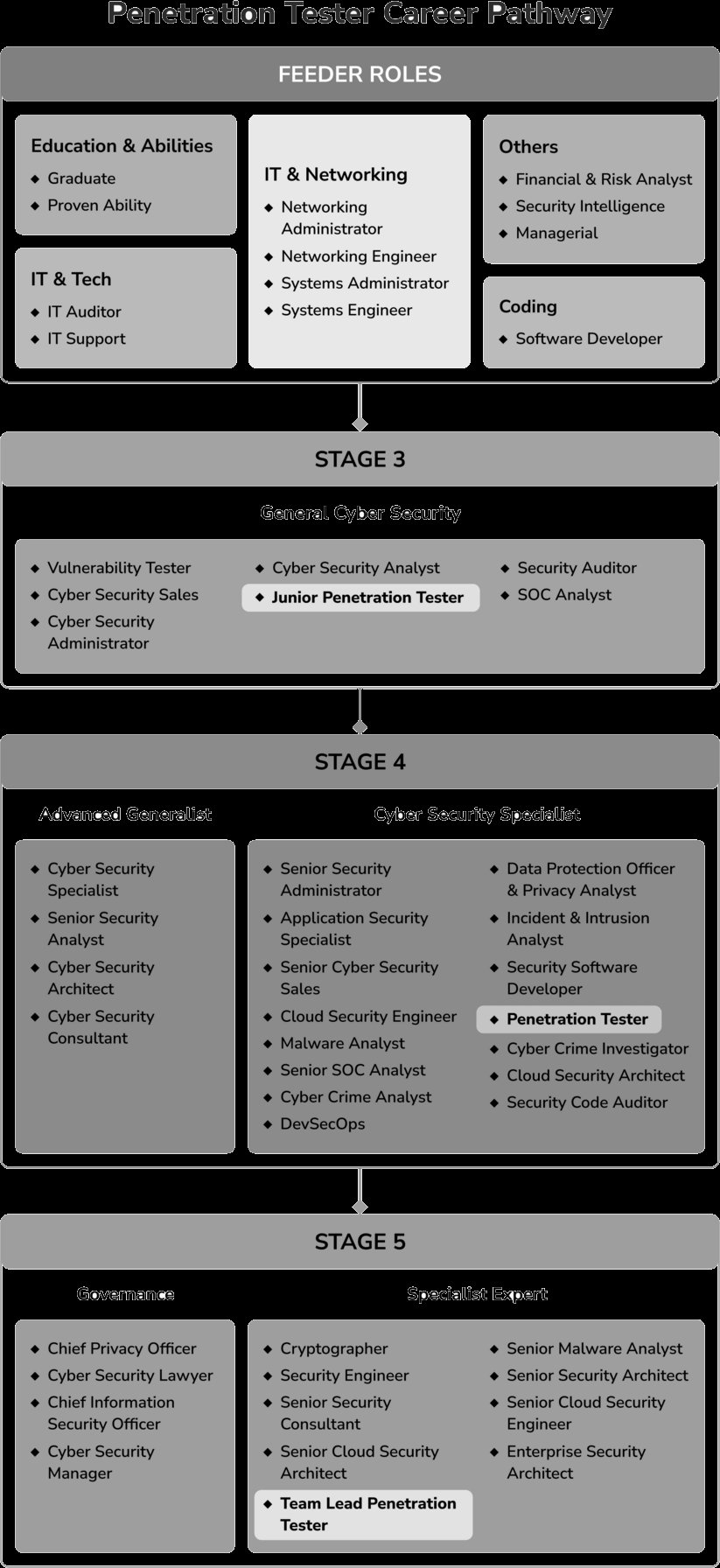
Credit: [StationX]
Where to Find Jobs: Leverage the popular job portals and networks:
✨ Click to check Top 20 Websites to Find IT Jobs in Singapore
| # | Website | Focus / Notes |
|---|---|---|
| 1 | MyCareersFuture | Official government portal; trusted source for local IT jobs |
| 2 | JobStreet SG | Popular across SEA; strong in tech, finance, and corporate hiring |
| 3 | LinkedIn Jobs | Top choice for IT professionals and remote-friendly opportunities |
| 4 | eFinancialCareers SG | Great for fintech, cyber risk, and IT roles in banking sector |
| 5 | Tech in Asia Jobs | Focused on startups, regional tech jobs, and remote options |
| 6 | NodeFlair | Singapore-based tech career platform with salary transparency |
| 7 | STJobs | Backed by The Straits Times, mostly local listings |
| 8 | JobTech | AI-driven platform that curates real-time job market data |
| 9 | Glints SG | Fast-growing platform for tech & creative roles, great for startups |
| 10 | JobsCentral SG | Covers both IT and non-IT sectors; good for fresh grads |
| 11 | StartupJobs Asia | Startup-centric, often includes equity-based and flexible roles |
| 12 | HackerTrail | Tech-specific hiring platform, includes coding challenges |
| 13 | Wantedly SG | Company culture-focused job search for startups and tech firms |
| 14 | Monster SG | International platform, useful for IT and expat positions |
| 15 | GrabJobs | Features chatbot-based application process, includes tech support roles |
| 16 | Xcruit | New-age job platform with integrated video resumes |
| 17 | InternSG | Best for internships, junior roles in IT, marketing, and engineering |
| 18 | TalentTribe | Visual job descriptions, focuses on tech and youth jobs |
| 19 | JobsDB SG | Still active, though many jobs are mirrored with JobStreet |
| 20 | DrJobs SG | Popular in the expat and overseas Singaporean community |
✨ Click to check Top 20 Websites to Find IT Jobs in Malaysia
| # | Website | Focus / Notes |
|---|---|---|
| 1 | JobStreet | Most popular job portal in Malaysia, strong IT category |
| 2 | Great for IT & cybersecurity, allows direct networking with employers | |
| 3 | JobsCentral | IT, engineering, and graduate jobs |
| 4 | Hiredly (WOBB) | Young, startup-friendly; includes internships & entry-level IT roles |
| 5 | myFutureJobs | Government portal, good for local IT and GLC jobs |
| 6 | Tech in Asia Jobs | Startup-focused, regional, many remote tech jobs |
| 7 | Glints | IT jobs in startups & SMEs, also has freelance and contract listings |
| 8 | FastJobs | Simple UI; has tech support, IT admin, and basic dev jobs |
| 9 | Jobstore | Broad platform, decent number of tech job listings |
| 10 | Indeed Malaysia | Global portal, wide range of local and expat-friendly IT roles |
| 11 | Job Majestic | Specializes in high-paying or niche roles, strong tech presence |
| 12 | FutureLab | Mentorship platform with growing job board for students and juniors |
| 13 | Monster Malaysia | Older platform but still lists IT jobs across Asia |
| 14 | Bossjob | AI-based matching, supports messaging employers directly |
| 15 | JobCart | Malaysian job portal gaining traction in tech & digital job markets |
| 16 | Jobify | Emerging site, startup jobs, internships, tech openings |
| 17 | Ricebowl | Bilingual portal (English/Chinese), includes tech jobs |
| 18 | TribeHired | For tech and startup talent, includes high-level developer roles |
| 19 | Maukerja | Blue-collar + tech support/IT admin roles |
| 20 | InternSheeps | Internships in IT, cybersecurity, and digital marketing |
✨ Click to check Top 10 Fresh Remote IT Job Sites
| # | Website | Focus / Highlights |
|---|---|---|
| 1 | We Work Remotely | One of the oldest & largest platforms for remote software & DevOps jobs |
| 2 | Remote OK | Remote tech jobs with global employers; filter by timezone |
| 3 | Turing | U.S. companies hiring vetted remote developers from Asia |
| 4 | Remotive | Curated list of remote dev, cloud, and cyber jobs globally |
| 5 | Jobspresso | Remote-only jobs in tech, sysadmin, cybersecurity, product, and support |
| 6 | Working Nomads | Daily updated list of remote tech roles from global sources |
| 7 | Outsourcely | Remote jobs from startups looking to hire directly - no commission cuts |
| 8 | Pangian | Remote jobs with timezone matching; strong in tech, cyber, data |
| 9 | Hubstaff Talent | Free remote job marketplace for freelancers and long-term IT contracts |
| 10 | CodementorX | High-paying freelance/remote developer jobs, especially for experienced devs |
- JobStreet and JobsDB: These are the most widely used portals in both countries. A search for “penetration testing” or “cybersecurity” in Malaysia returns several hundred results at any given time. Set up email alerts for relevant keywords so you catch postings as soon as they go live.
- LinkedIn: This is crucial. Keep your LinkedIn profile updated with your skills and projects. Follow companies you’re interested in and engage with their content. Many jobs get posted on LinkedIn or through recruiters scanning profiles. Networking on LinkedIn can lead to referrals - connect with cybersecurity professionals, join groups like “Cybersecurity Malaysia” or “SG InfoSec Community,” and share your own learning journey (it shows enthusiasm).
- Niche Job Boards: In Singapore, sites like MyCareersFuture (government portal) list tech jobs and sometimes grad programmes. Globally, sites like Indeed or Glassdoor also list local positions (Glassdoor showed 200+ cyber jobs in MY and 500+ in SG recently). Additionally, check specialized forums or community boards: the Malaysian cybersecurity community (e.g., LE-Global forum, local OWASP chapters) might share job leads; Singapore has groups like Division Zero (Div0) where jobs might be passed around.
- Career Fairs & Meetups: Attend tech career fairs (universities often host them - even if you’re alumni you can sneak in or join public tech fairs). Cybersecurity conferences or community meetups (e.g., BSidesKL, Hack In The Box, DevSecOps meetups, etc.) are great for networking. Bring business cards or just swap contacts - it might not yield an immediate job, but building relationships can lead to opportunities down the road. Many jobs, especially in a small industry like cybersecurity, come through word-of-mouth referrals.
Local Market Trends: In Malaysia, the Cyber Security Act 2024 has pushed sectors like finance, healthcare, and critical infrastructure to take security assessments seriously—which means more demand for pentesters, both in-house and through consultancies. Government incentives for digital security investment continue to encourage hiring across the board. In Singapore, the trend toward contract roles and project-based engagements is well-established—a meaningful portion of tech professionals in Singapore work on contract, and pentesting is no exception. Contract roles can actually be easier to land when you’re starting out and often convert to permanent positions. Both markets are also increasingly hiring on demonstrated skills rather than credentials alone, which means your lab work, CTF rankings, and bug bounty history carry real weight.
Applying and Interviewing: Tailor your resume for each application. Highlight relevant skills (list the tools you know, the certs you have or are pursuing, and the practical projects you did). Use keywords like “penetration testing, vulnerability assessment, Kali Linux, OSCP, CTF, network security” - many HR screeners look for these. For fresh grads, listing coursework or final year projects related to security can help. A short cover letter or email expressing why you’re interested in that company and role (and how you can contribute) can set you apart since many don’t bother writing one. Be sure to mention any connection to the local context if applicable (e.g., “I’m an active member of [University’s] Cybersecurity Club, where we trained for CyberSEA Games 2024” or “I follow MAS cybersecurity guidelines closely” for SG banking jobs).
When you get called for an interview, be ready for both technical and behavioral questions. Some common entry-level pentester interview questions include:
- “Explain the steps you take in a penetration test.” - Here, talk through reconnaissance, scanning, exploitation, post-exploitation, reporting (show you know the methodology).
- “What are some common vulnerabilities you would look for in a web application?” - Mention things like SQL injection, XSS, broken access control, etc., perhaps referencing OWASP Top 10, and maybe an example of how you’d test for one.
- “Have you used [X tool] and what for?” - If they ask about Burp, Metasploit, or others you listed on your resume, be ready to describe a scenario of using it (for example, “Yes, I used Burp Suite to intercept and modify JWT tokens in a lab application to test access controls”).
- “How do you keep yourself updated in cybersecurity?” - They want to see passion. You could say you follow cybersecurity news, read blogs (like Top 10 Cybersecurity Threats to Watch in 2026), practice on HackTheBox, etc. This is where you mention your lab/CTF activities proudly.
- Behavioral questions: “Tell us about a challenging problem you solved,” or “How do you handle tight deadlines or learning something quickly?” - have a story ready perhaps about a CTF challenge you initially couldn’t solve but persevered, or how you self-learned a new tool under time pressure during a competition.
If the role is client-facing (consulting), they may also test your soft skills: e.g. role-play a scenario where you have to explain a vulnerability to a non-technical client. Practice simplifying technical jargon. Instead of saying “SQLi with UNION-based extraction of the user table,” you’d say “a database flaw that could allow an attacker to see all user records - like what happened in the XYZ breach - and here’s how to fix it.” Showing that you can communicate effectively will assure them you can handle real engagements.
Finally, don’t be discouraged by rejection. Cybersecurity is in demand but entry roles can still be competitive, especially in Singapore. You might apply to 20 jobs and hear back from 3 - that’s normal. Keep improving yourself in the meantime. Sometimes, taking a slightly adjacent job first helps (for example, a SOC analyst or IT security support role) and then transitioning internally to pentest after a year. Or perhaps a short contract gig leads to permanent. Be open to these pathways. The important thing is getting your foot in the industry door - once you have some experience, moving up and around becomes much easier.

Salary Expectations in 2026
Let’s talk numbers. What you can earn as a penetration tester in Malaysia or Singapore depends on your experience level, certifications, the company’s size, and the sector. Below is a realistic comparison of penetration tester salary ranges (monthly) in 2026 for Malaysia (MYR) and Singapore (SGD):
| Role Level | Malaysia (MYR) per month | Singapore (SGD) per month |
|---|---|---|
| Entry-Level Pentester (0-2 years) | RM 3,000 - RM 5,500 | $3,500 - $5,500 |
| Mid-Level Pentester (3-5 years) | RM 6,000 - RM 10,000 | $6,000 - $9,000 |
| Senior/Lead Pentester (5+ years) | RM 12,000 - RM 18,000+ | $10,000 - $15,000+ |
Notes: These are realistic estimates for 2026. In Malaysia, fresh graduates in KL typically land in the RM4,000–5,500 range, though top consulting firms and critical sectors like banking or government can push entry-level offers higher. The mid-level range reflects someone with a few years of real testing experience and certifications like OSCP or CREST—these professionals are genuinely in short supply, which explains the significant jump. Senior roles—lead consultants, principal testers, red team leads—command the highest salaries, especially in Singapore where established pentesters are regularly recruited by banks and multinational firms. Breaking S$12,000/month as a seasoned tester in Singapore is realistic, and the top specialists or managerial leads can earn well above that.
In Malaysia, while the absolute numbers are lower, senior pentesters earn well above the national IT average. A RM15,000/month role puts you in a strong position by any local benchmark. And the trend is upward—demand is rising faster than the talent pool, which means employers are competing to attract qualified candidates. Also factor in benefits: many firms include training allowances, certification sponsorship, and performance bonuses that meaningfully add to the base figure.
Globally, the average pentester earns around USD $95K/year in 2026. Singapore sits significantly above that average; Malaysia’s figures are lower in absolute terms but competitive within the regional context and trending upward steadily.
Salary negotiation tips: Don’t skip negotiation when you receive an offer. In Singapore, it’s expected—just back your ask with specifics, like a competing offer or a certification you’ve already achieved. In Malaysia there’s sometimes less room for fresh graduates, but if you have something tangible (OSCP certified, an active CTF ranking, a bug bounty win), you have grounds to push. Annual salary surveys from recruitment firms like Hays and Michael Page cover cybersecurity roles specifically and are useful for benchmarking before a negotiation. Also account for the full package: bonuses, certification reimbursements, and travel allowances can add meaningful value on top of base pay.
On contract roles: In Singapore, contract pentesters often command slightly higher monthly rates than permanent staff, since certain benefits aren’t included. A contract at S$6,000–7,000/month as a fresh tester isn’t unusual, though you’ll want to be thoughtful about conversion to perm over time.
Think of the first two to three years as an investment period. The salary curve in this field is steep once you’ve proven yourself. With five or more years of solid experience, you’ll have strong options across the region—regional roles, Singapore-based positions for Malaysian professionals, remote engagements for US or European firms, and leadership tracks within existing teams. Penetration testing rewards people who keep learning, and the financial returns follow accordingly.
Building Your Cybersecurity Profile (CV, Portfolio, Networking) ✨
Breaking into the industry requires more than just skills; you have to present those skills effectively. Here’s how to craft your personal brand and portfolio to impress recruiters and hiring managers:
-
Crafting a Strong Cybersecurity CV: Your resume should scream “cybersecurity” at a glance. Use a clear format and focus on relevant content. Start with a summary that mentions your key qualifications (degree or certs) and your passion for penetration testing (e.g., “Offensive security enthusiast with hands-on experience in ethical hacking labs and CTF competitions”). In the skills section, list technical skills like “Penetration Testing (Web App & Network), Vulnerability Assessment, Kali Linux, Metasploit, Burp Suite, Python, Linux administration, etc.” Include languages (programming and human, if relevant - e.g., knowing Malay or Chinese can be a plus in social engineering contexts). For experience, if you have formal experience (internships, freelance gigs), describe what you did specifically (e.g., “Performed security assessment of web application using Burp Suite and identified 5 major vulnerabilities”). For non-security jobs or school projects, try to frame tasks in a security or technical light: did you manage a server? develop software? That shows transferable skills. Include a “Projects” subsection where you list your lab and CTF endeavors: show that you walk the talk. For example: “Home Cyber Lab - Set up and secured a lab with 5 VMs, then conducted simulated attacks to practice exploits (e.g., buffer overflow on Windows Server)”; “Bug Bounty - Participated in HackerOne, received 2 hall of fame mentions for reporting XSS vulnerabilities”; “CTF - Ranked in top 10% on TryHackMe (username: yourhandle) with over 100 challenges solved.” These concrete examples can be discussed in interviews and prove you’re self-driven. Finally, list your certifications (even those in progress) and any relevant awards (maybe you won a CTF or got a scholarship). Keep the CV to 2 pages max, but make every line count.
-
Online Presence and Portfolio: In 2025, having an online portfolio is a differentiator. This could be as simple as a GitHub profile or a personal website/blog. If you have coding projects (exploit scripts, custom tools, CTF write-ups), put them on GitHub and share the link on your CV. Recruiters do check candidates’ GitHub or personal blog if provided - it can really boost your credibility. A personal blog is also a great idea: you could write articles like “How I hacked a vulnerable VM in 3 steps” or “My experience preparing for OSCP”. Optimize these posts with keywords (who knows, maybe a recruiter googling “entry-level pentester Malaysia” stumbles on your blog!). Since this is an SEO-focused guide: use LinkedIn to your advantage too. Write a post about your journey, incorporate keywords like penetration testing career, cybersecurity jobs in Malaysia, etc., and hashtags - it might catch the eye of someone hiring or at least help build your network. Also, ensure your LinkedIn profile is fully filled out, with a professional-looking photo, a headline like “Aspiring Penetration Tester | OSCP Certified (if applicable) | Cybersecurity Enthusiast”, and a summary highlighting your skills and ambition. Many recruiters in SG and MY actively search LinkedIn for terms like “OSCP” or “penetration testing”, so having those in your profile can lead to inbound opportunities.
-
Networking and Mentoring: Sometimes who you know can be as important as what you know. Engage with the cybersecurity community locally. Join Facebook or Telegram groups related to cybersecurity in Malaysia/Singapore. There are Discord servers for Hack The Box or local DefCon groups - be an active, positive participant. You might find a mentor this way or at least peers to study and share job tips with. Consider volunteering at cyber events (like helping organize a CTF or volunteering at conferences); it exposes you to industry professionals. When people see you’re passionate and involved, they’re more likely to refer you to openings. Don’t be afraid to reach out politely to professionals for advice - for example, if you find a senior pentester on LinkedIn who posts useful content, leave thoughtful comments or send a brief message appreciating their insights and maybe ask a specific question. Building genuine connections can lead to insider knowledge of openings or even recommendations.
-
Reference Your Knowledge of Local Context: When applying in Malaysia or Singapore, it helps to show you understand the local cybersecurity landscape. For instance, mention that you’re aware of relevant laws (PDPA, Cybersecurity Act) or standards (e.g., Threats prevalent in the region, compliance standards like Singapore’s Cybersecurity Code of Practice or Bank Negara’s guidelines). This isn’t required per se, but it’s a bonus point demonstrating you’re attuned to the environment you’ll work in. For example, a bank in Malaysia will be impressed if you know about RMiT (Risk Management in IT) guidelines that include pentest requirements. A company in Singapore might appreciate that you followed news of recent cyber incidents affecting SG companies. Our article on Top 10 Cybersecurity Threats to Watch in 2026 might give you some talking points on emerging threats in the region.
-
Continuous Improvement: Finally, outline a bit of your growth plan. Employers love candidates who have a vision for their professional development. You might say in interviews, “In the next year I plan to obtain the OSCP certification and specialize further in cloud penetration testing,” or “I’m working on improving my malware analysis skills to complement pentesting, as I know some roles value that crossover.” This shows you’re proactive and likely to continue adding value. Just be careful to convey this in a way that also shows you’re committed to the role at hand (they want to know you’ll stick around, not train up and jump ship immediately).

Real-World Insights and Next Steps
Starting a penetration testing career is challenging, but it’s one of the more rewarding paths in tech—intellectually, financially, and professionally. You’ll need to wear several hats: learner, hacker, consultant, and writer. It’s normal to feel overwhelmed by the sheer breadth of the field. The key is to focus on one skill or domain at a time and build genuine depth, rather than trying to learn everything at once. Here are two grounded insights from experienced professionals to close this out:
Quote from a Local Professional: “In Singapore, where 92% of organizations have experienced breaches due to the cyber skills gap, it’s crucial for us to bridge that divide by building a well-trained workforce as the first line of defense against cyber threats,” notes Jess Ng, Country Head for Singapore at a global cybersecurity firm. This underlines that companies are very aware of the talent shortage - they need people like you! Even big firms are investing in training fresh talent, so don’t underestimate your value as an up-and-comer in the field.
Quote on Attitude: “Attitude is much more important than having done a certain course. If your heart’s not in it, you won’t keep up in penetration testing,” one expert pentester says. Take this to heart - a curious, can-do attitude will accelerate your career. Show that you’re genuinely interested in security beyond just landing a job: tinker with new tools, stay late to solve that last CTF challenge, share knowledge with peers. Employers notice and appreciate this spark.
Now, let’s outline some next steps you can act on immediately after reading this guide:
-
Make a Learning Plan: Write down the first certification or skill you’ll tackle, and set a concrete timeline. For example: ”By August 2026, finish TryHackMe’s Offensive Pentesting path; by October 2026, pass CompTIA Security+; by December 2026, launch a portfolio site with CTF write-ups.” A written plan converts goals into scheduled action.
-
Join a Community: If you haven’t yet, find a local or online cybersecurity group this week. Sign up for CyberSecurity Malaysia events, CSA’s Cyber Youth programmes, or join a Discord community around HackTheBox or TryHackMe. Being active in a community keeps you motivated, surfaced to job leads early, and connected to people who’ve already solved the problems you’ll face.
-
Start Applying Before You Feel Ready: Waiting until you’re “100% ready” means waiting indefinitely. Start applying for internships and junior roles once you meet most of the requirements. Every interview—even the ones you don’t get—is useful practice and a networking opportunity. For general career guidance, revisit the Cybersecurity Career Accelerator and our Social Engineering Roadmap for perspective on the human side of pentesting.
-
Stay Current and Stay Ethical: Build a habit around following cybersecurity news—CSA advisories, threat intel blogs, CVE notifications. When a critical vulnerability surfaces, understanding it and recreating it in your lab is one of the fastest ways to stay sharp. And hold the line on ethics: only test systems you have explicit permission to touch. A single lapse can end a career; a strong ethical reputation makes you trustworthy and employable at every level.
Launching a penetration testing career in Malaysia or Singapore in 2026 puts you at the intersection of growing demand and real opportunity. The field is genuinely hungry for capable, motivated professionals—and with a clear plan for education, certifications, hands-on practice, and job hunting, you have everything you need to get started. Stay curious, be persistent, and find mentors wherever you can. As you build your career, you’re also building a safer digital environment for the region around you. Good luck, and hack ethically.