
TL;DR
Modern cyber warfare has moved well beyond simple propaganda and web defacement. Today it is a high-stakes arena of data control, precision kinetic-digital strikes, and algorithmic influence — where nation-states, ransomware syndicates, and AI-powered tools all compete on the same battlefield.
To survive this environment, where code, cognition, and geopolitics intersect, defenders are shifting to zero-trust architectures, real-time AI threat detection, and privacy-first frameworks. Understanding how we got here is the first step toward building meaningful defenses.
Timeline of Modern Cyber Conflicts
| Year | Event / Operation | Impact |
|---|---|---|
| 2010 | Stuxnet (US/Israel vs. Iran) | The first known malware engineered to cause physical destruction, sabotaging Iranian nuclear centrifuges and rewriting the rules of digital warfare. |
| 2014 | Russia-Ukraine Hybrid Conflict | State-backed cyber offensives ran concurrently with the physical annexation of Crimea, establishing the template for hybrid war. |
| 2016 | US Presidential Election Interference | Coordinated botnets and disinformation campaigns exploited social platforms to deepen political polarization ahead of election day. |
| 2017 | NotPetya Supply-Chain Attack | Malware disguised as ransomware caused over $10 billion in global damage, bringing shipping giants, pharmaceutical firms, and government agencies to a halt. |
| 2020 | SolarWinds Infiltration | Russian state actors embedded malicious code into a routine software update, giving them months of silent access to US government networks. |
| 2021 | Colonial Pipeline & Kaseya | Ransomware groups crippled critical energy infrastructure and a major IT provider, forcing the US to treat cyber extortion as a national security crisis. |
| 2022 | Full-Scale Invasion of Ukraine | Kinetic military operations merged with wiper malware campaigns, satellite network attacks, and mass information warfare in real time. |
| 2023–2025 | AI-Assisted Targeting (Gaza) | The first documented use of AI-assisted targeting platforms in active combat raised urgent questions about automated lethal decision-making. |
| 2024 | The Global AI Election Year | Generative AI dramatically lowered the cost of producing localized disinformation, flooding dozens of national elections with synthetic content. |
The New Threat Landscape
Nation-States and Proxy Groups
Major world powers now operate dedicated cyber commands built for espionage, infrastructure sabotage, and public manipulation. Russia has long embedded psychological operations directly into its tactical campaigns, while China maintains an industrial-scale intelligence apparatus targeting governments, corporations, and research institutions worldwide. To preserve plausible deniability, these states increasingly work through proxy actors — informal coalitions of “patriotic” hackers who carry out state objectives without leaving an official fingerprint.
The Cybercrime Syndicate
Ransomware networks have matured into something resembling legitimate businesses, complete with customer support, negotiation teams, and affiliate programs. Though profit is the primary driver, their targets frequently align with state interests — disrupting hospitals, energy grids, and financial systems in ways that create geopolitical pressure without the need for a formal declaration of conflict. When a ransomware group locks up a city’s emergency services, the line between criminal opportunism and strategic sabotage becomes very thin.
Hacktivists and Ideological Actors
Decentralized movements like Anonymous, as well as dozens of smaller cause-driven collectives, continue to blur the boundary between online activism and outright sabotage. Because these groups operate without a central hierarchy, they are unpredictable, fast-moving, and difficult to deter. They also make useful proxies for state actors who can quietly amplify their operations during a crisis.
AI-Enabled Threat Actors
Generative AI has democratized digital warfare in a way no previous technology has. Sophisticated attack techniques are no longer the exclusive domain of well-funded intelligence services. Individuals with modest resources can now use off-the-shelf AI tools to write convincing spear-phishing emails, generate realistic deepfakes, or automate target reconnaissance on corporate networks. Security leaders increasingly report that organizations feel genuinely unequipped to handle this new wave of AI-accelerated threats.
PsyOps and Digital Influence Warfare
Modern psychological operations have shifted their target from physical territory to the human mind. The leaflets dropped from planes have been replaced by algorithms, the whispered rumors by deepfakes, and the state-run broadcasts by social media feeds designed to feel organic.
- Botnets and Troll Farms: Automated networks spin up thousands of synthetic accounts to manufacture consensus — amplifying specific hashtags, flooding comment sections, and making fringe narratives appear mainstream.
- Deepfakes and Synthetic Media: AI-generated audio and video can now convincingly mimic politicians, military officers, and executives, creating credible-seeming crises in moments of high tension.
- Spear-Phishing at Scale: Machine learning processes public data to craft hyper-personalized messages with perfect grammar, eliminating the telltale red flags that training programs once focused on.
- Clone Media Networks: Networks of fake news outlets staffed by non-existent journalists publish fabricated stories that surface in mainstream search results and get shared as legitimate reporting.
- Cognitive Targeting: By analyzing behavioral data, threat actors identify specific emotional triggers within demographic groups and serve them content engineered to deepen polarization.
This layered approach is known as cognitive warfare. The goal is not to destroy infrastructure, but to corrupt public trust, distort shared reality, and divide the society that infrastructure serves.
AI in Cyber Conflict
Artificial intelligence now functions simultaneously as weapon and shield in modern conflicts.
On the offensive side, AI automates reconnaissance, generates adaptive malware, and personalizes social engineering campaigns for maximum psychological impact. Threat actors who once needed skilled developers can now accomplish the same with fine-tuned open-weight models running on consumer hardware.
On the defensive side, security platforms use machine learning to process massive event logs, detect behavioral anomalies, and block attacks in real time. But defenders are often playing catch-up, since the same models they use for protection are also available to the people they are defending against.
The trajectory points toward autonomous information warfare. AI engines can already draft social media posts, respond to arguments in comment sections, and optimize their messaging based on real-time audience reactions. The major elections of 2024 showed that the deployment pipeline for this kind of operation is fully mature. The next international crisis may be narrated, framed, and deliberately escalated by algorithms before human editors have time to respond.

Case Studies: Real Conflicts in the Digital Age
Ukraine (2022–Present): The First Full-Scale Hybrid War
Ukraine represents the most documented fusion of kinetic and cyber operations in history. Before Russian ground troops crossed the border in February 2022, state-sponsored hackers launched targeted wiper attacks against Ukrainian banking systems, government networks, and satellite infrastructure. The Viasat KA-SAT attack on the first morning of the invasion disrupted military communications and knocked out tens of thousands of satellite terminals across Europe.
Ukraine’s response included the creation of the IT Army — a globally distributed volunteer force of developers, security researchers, and hobbyists who conducted DDoS campaigns against Russian government portals, logistics networks, and state media outlets. While the military impact of these operations was limited, they demonstrated that citizen-driven cyber action can shape the narrative of a modern conflict in ways conventional military doctrine never anticipated.
Gaza (2023–2025): Algorithmic Targeting in Active Combat
The military operations in Gaza marked the first publicly documented deployment of AI-assisted targeting systems in live combat. Investigative reporting, particularly from +972 Magazine and Local Call, revealed the use of platforms called Lavender and The Gospel — systems that process surveillance data including phone records, location history, and social network graphs to identify and rank potential targets at machine speed and scale.
Israeli military officials acknowledged using AI tools to accelerate targeting workflows while maintaining that human analysts authorize every strike. Independent assessments from human rights organizations and defense researchers contested this framing, arguing that the volume and pace of recommendations effectively reduced human review to a procedural formality. Whatever the precise operational reality, Gaza established a precedent: AI now has a documented role in lethal military targeting, and the ethical and legal frameworks for governing that role remain deeply unsettled.
Iran and Regional Infrastructure Targeting
Iranian cyber operations have consistently targeted critical infrastructure across the Middle East and beyond — hitting municipal water systems, power grids, and hospital networks in neighboring states. These campaigns reflect a deliberate strategic posture: using low-cost cyber operations to project force and cause disruption without crossing the threshold that would justify a conventional military response. The 2021 attack on an Israeli water treatment facility, attributed to Iranian actors, illustrated how civilian infrastructure has become a routine target in asymmetric conflict.
Supply-Chain Attacks: The Trusted Vector
The SolarWinds and Kaseya breaches established a template that remains one of the most effective attack strategies available. By compromising a trusted software vendor, attackers can distribute malicious code through legitimate update channels to thousands of downstream targets simultaneously. The victims install the update willingly, their security tools see nothing unusual, and the attacker gains persistent access to high-value systems at scale. Supply-chain sabotage exploits the baseline trust that makes modern IT infrastructure function, turning ordinary security maintenance into an entry vector.
Defensive Evolution: From Firewalls to Zero Trust
Implementing Zero-Trust Architecture
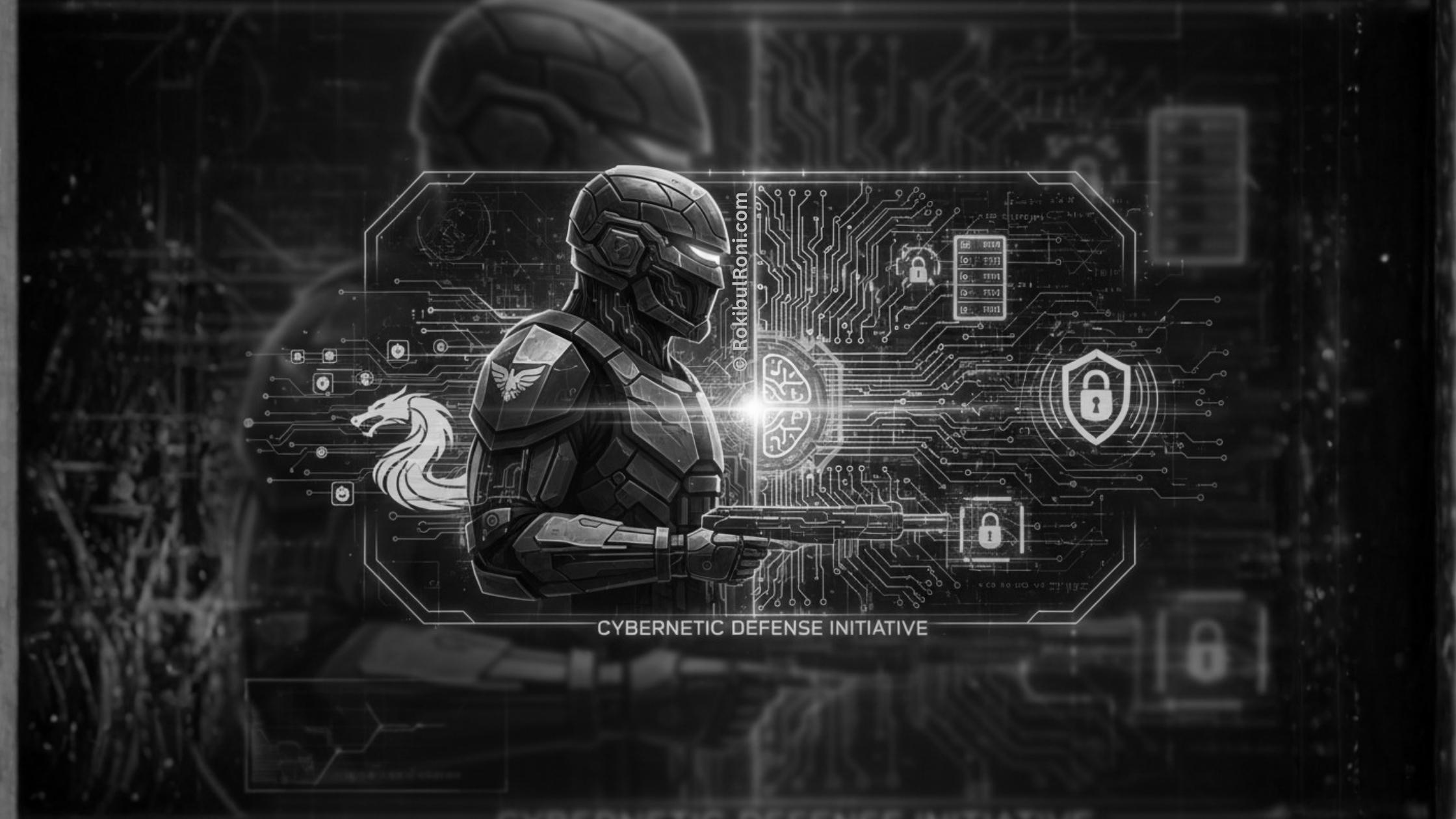
Traditional perimeter security assumes that once a user or device is inside the network, it can be trusted. Zero Trust inverts that assumption entirely: every user, device, and connection must be authenticated and authorized at every step, regardless of where they originate. The underlying principle is straightforward — assume breach, verify continuously.
Key components include strong multi-factor authentication, network micro-segmentation that isolates workloads into small zones, and least-privilege access controls that limit what any given credential can reach. Zero Trust does not prevent attackers from getting in; it limits what they can do once they are.
Red-Teaming and Offensive Auditing
Defensive systems need to be tested against realistic attacks before real attackers find the gaps. Red-team exercises bring in skilled security professionals to simulate adversary behavior, probe for weaknesses, and report findings before those findings become incidents. Discovering a vulnerability in a controlled exercise is not a failure — it is the entire point.
Collective Threat Intelligence
No organization can build a complete threat picture in isolation. Shared intelligence networks allow organizations to pool information about active attack campaigns, newly identified indicators of compromise, and emerging exploit techniques. When one member of a network identifies a new threat, the rest can deploy countermeasures before the attacker shifts their focus.
Privacy-First Data Practices
For individuals, using end-to-end encrypted messaging, reputable VPNs, and privacy-focused browsers reduces the surface area available to surveillance and profiling tools.
For organizations, strict data-minimization policies reduce exposure in the event of a breach. If sensitive data is never collected or is deleted promptly after its purpose is served, it cannot be stolen.
Essential Zero-Trust Security Checklist
| Security Action | Primary Defensive Purpose |
|---|---|
| Enforce Multi-Factor Authentication (MFA) | Renders stolen passwords insufficient for account access. |
| Segment Internal Networks | Limits an attacker’s ability to move laterally after gaining initial access. |
| Apply Least-Privilege Access | Restricts credentials to only the resources a user actually needs. |
| Continuous Security Monitoring | Detects unusual behavioral patterns before they escalate into incidents. |
| Implement Automated Patch Management | Closes known vulnerabilities before exploit scripts can reach them. |
| Store Encrypted Offline Backups | Provides a clean recovery path when ransomware locks production systems. |
| Conduct Regular Security Awareness Training | Prepares staff to recognize social engineering before they act on it. |
Privacy and Autonomy in the Surveillance Age
By 2030, ambient surveillance will likely be woven into the physical environment. Every connected device — smart appliances, wearable health trackers, autonomous vehicles — generates a continuous stream of data that can be aggregated to build detailed behavioral profiles without any single data source appearing significant on its own.
IoT and the Physical Envelope
Connected devices collect far more than they seem to. Modern Wi-Fi sensing techniques can already map movement within a room, detect physical posture, and in some research demonstrations estimate breathing rates through walls. The implication is significant: privacy is no longer solely about protecting data on a screen — it now extends to protecting physical presence in a monitored space.
Wearable Augmented Reality
As smart glasses and AR headsets move from enterprise niche to consumer mainstream, their forward-facing cameras will continuously scan public spaces in ways that casual observers never anticipate. Without robust regulatory frameworks, these devices risk turning everyday public interaction into a data harvest covering faces, expressions, gaze patterns, and location trails.
Neural Interfaces and Cognitive Privacy
Brain-computer interfaces are advancing from medical research into commercial applications faster than the regulatory frameworks designed to govern them. Neural data represents the most intimate category of personal information that exists. If it is stored commercially or transmitted to cloud services, it creates a class of exposure that no password change or account deletion can address.
The Data Broker Ecosystem
Even when processing happens locally on a device, telemetry and metadata routinely travel back to central servers. Commercial data brokers combine these inputs across sources to build detailed consumer profiles that are then sold — to marketers, insurers, and sometimes to government agencies — without the knowledge of the people who generated that data.
Counter-Surveillance Techniques
Security researchers are developing privacy-preserving tools that introduce deliberate noise or distortion into collected data signals, protecting individual identities within monitored environments. These approaches function as a form of digital camouflage, making it harder to extract actionable intelligence from mass surveillance feeds.
The Next Frontier: AI, Ethics, and Accountability
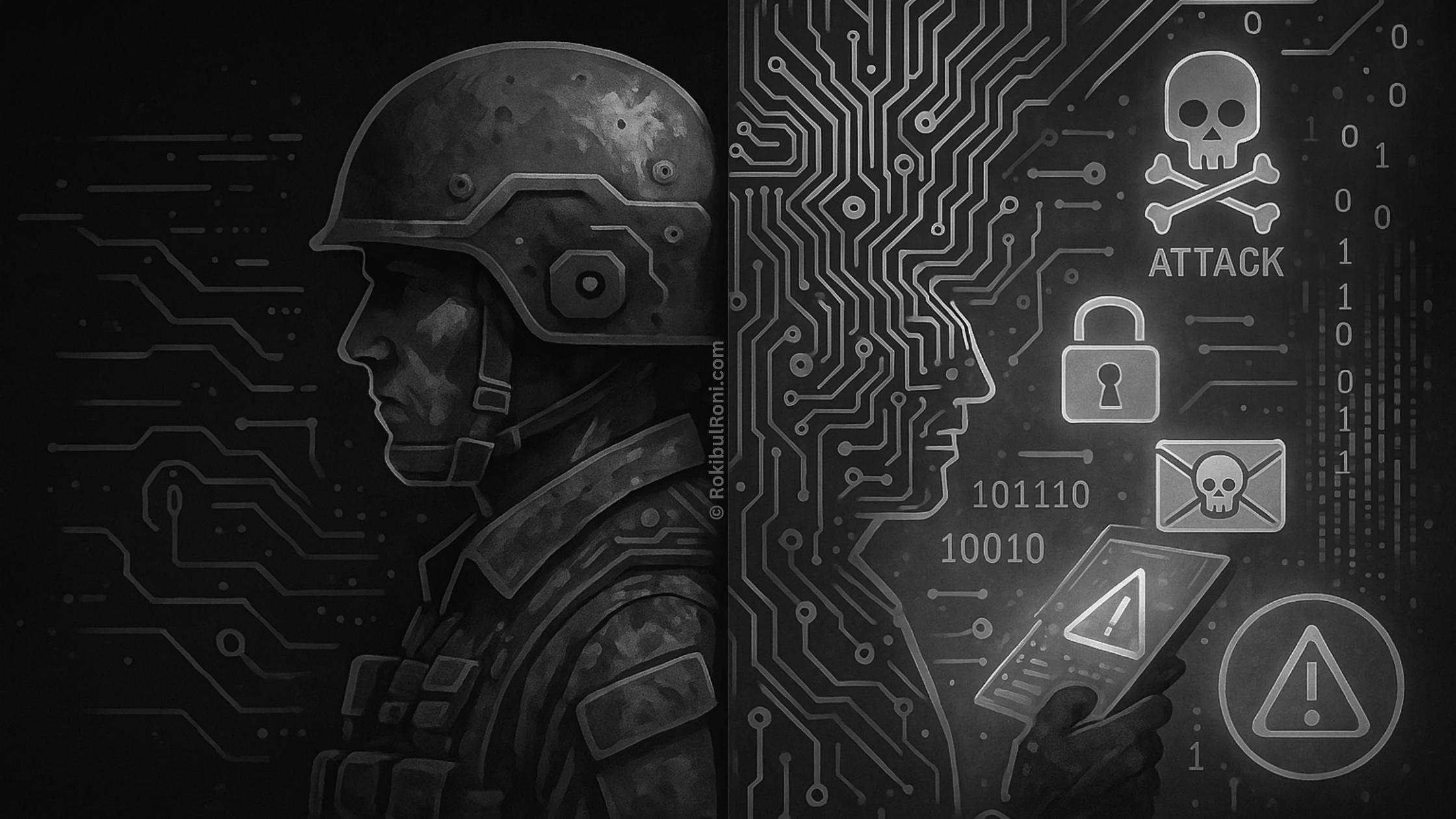
The central ethical question in modern defense is no longer whether AI will participate in military decision-making — it already does. The question is how much autonomous authority we are willing to delegate to systems that cannot explain their reasoning in terms a human commander can audit.
- Legal Responsibility: When an autonomous targeting system makes a catastrophic mistake, accountability is genuinely unclear. Does it belong with the software engineers, the commanding officers, the procurement officials, or the government that authorized the program?
- The Interpretability Problem: Deep neural networks process information in ways that even their creators cannot fully explain. This opacity makes post-incident review extremely difficult and undermines the kind of accountability frameworks that military law requires.
- Automated Escalation: Systems designed to respond at machine speed can initiate retaliatory actions before any human commander has had time to assess the situation. In a sufficiently tense conflict, this creates escalation dynamics that no one intended and no one may be able to stop.
Recent conflicts have made these questions urgent, not theoretical.
Building Digital Resilience
Real resilience is not purely a technical achievement — it is social and psychological. Governments need defenses capable of handling hybrid threats that blend infrastructure sabotage, media manipulation, and AI-driven influence campaigns simultaneously. Technical controls alone cannot do that job.
At the individual level, digital literacy has become a genuine component of national security. Knowing how to verify a source, recognize manufactured consensus, and limit unnecessary personal data exposure is no longer just good hygiene — it is a practical form of civic defense.
Privacy Survival Guidelines (2025–2030)
- Use End-to-End Encryption: Choose messaging and storage platforms that encrypt data before it leaves your device, so only the intended recipient can read it.
- Minimize Public Sharing: Think carefully about what you post publicly. Details like family names, home locations, and routine schedules are the raw material for social engineering.
- Review App Permissions Regularly: Check camera, microphone, and location access settings for every app on your phone. Revoke permissions that serve no functional purpose.
- Support Decentralized Alternatives: Where practical, prefer open-source and federated services that do not rely on a single commercial entity controlling your data.
- Treat Biometrics as Permanent: Face recognition patterns, voiceprints, and fingerprints cannot be reset after a breach the way a password can. Handle them accordingly.
- Practice Basic OSINT Hygiene: Search your own name periodically to see what information is publicly accessible. If you can find it easily, so can someone with bad intent.
Closing Thoughts
Cyber warfare has evolved into something far more complex than web defacement or propaganda. It now operates at the intersection of data science, behavioral psychology, geopolitics, and automation — and the boundary between each of those domains is getting harder to find.
From volunteer digital forces in Eastern Europe to AI targeting systems in the Middle East, from ransomware rings that function like businesses to surveillance infrastructure embedded in everyday consumer devices, the battlefield now includes every connected system and everyone who uses one.
The deepest challenge for defenders is not simply keeping adversaries out of networks. It is maintaining meaningful human judgment in a world that increasingly delegates consequential decisions to automated systems.
In tomorrow’s conflicts, the most dangerous weapon may not be code designed to destroy — but code trusted to decide.