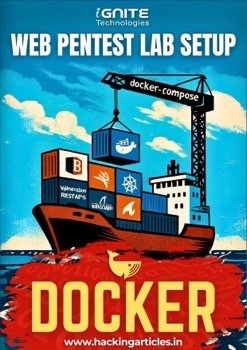
“Vulnerable web applications are intentionally designed to be insecure, allowing researchers to test and improve their skills safely. Docker provides the isolated, ephemeral environments required to deploy them without compromising your host.”
The foundation of any serious offensive security education is the establishment of a dedicated homelab. Historically, provisioning vulnerable machines required excessive hardware resources, massive VM hypervisor overhead, and constant snapshot management to prevent total lab destruction. Web Pentester Lab Setup - Docker completely modernizes this process, utilizing containerization to stand up a sprawling, highly diverse penetration testing network in seconds.
The Power of Containerization
The manual begins by discarding heavy hypervisors in favor of Docker and Docker Compose. It dictates the baseline Debian/Ubuntu packages required to launch the daemon, setting the stage for rapid infrastructure deployment. By utilizing isolated containers, a researcher can launch catastrophic SQL Injections or upload destructive reverse shells without ever jeopardizing their base operating system.
Deploying the Vulnerability Matrix
The true value of this manual is its exhaustive repository of configuration commands. It acts as a massive cheat sheet for instantly pulling and deploying the industry’s most respected vulnerable testing environments.
The guide provides the exact docker run syntax, required port mappings, and default initialization credentials for an incredibly wide array of targets, including:
- The Classics: DVWA (Damn Vulnerable Web App), bWAPP, and SQLi-Labs for mastering foundational injection and cross-site scripting (XSS) logic.
- Modern Frameworks: OWASP Juice Shop and OWASP WebGoat, emphasizing modern JavaScript logic flaws and complex REST API abuses.
- Niche Attack Surfaces: Dedicated containers for exploiting Server-Side Request Forgery (SSRF), GraphQL misconfigurations, Python validation bypasses (PyGoat), and embedded secrets (OWASP WrongSecrets).
Rapid Infrastructure Reset
A critical advantage highlighted in the guide is the ephemeral nature of these Docker deployments. When an attacker thoroughly corrupts a database during a heavy SQLMap campaign or accidentally breaks the application logic, the container is simply destroyed and re-spun using --rm flags, restoring a pristine testing environment in literal milliseconds.
Who Is This Book REALLY For?
- Aspiring Pentesters: The absolute best starting point for entering the industry. It removes the friction of building a lab, allowing students to focus immediately on exploitation using completely legal, offline targets.
- Security Researchers: Providing an instant methodology to spin up a specific, isolated vulnerable instance (like GraphQL or SSRF) to test emerging exploit methodologies or debug custom payloads.
- Corporate Training Teams: An essential blueprint for standardizing internal Capture The Flag (CTF) environments or onboarding exercises for new security analysts without burdening internal IT infrastructure.
The Bottom Line
Web Pentester Lab Setup - Docker is less of an exploitation guide and more of an architectural necessity. It is the ultimate blueprint for building a safe, chaotic, and highly disposable training ground for offensive security operations.