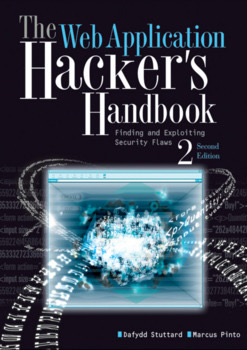
Alright, let’s talk about a true classic. If you’ve spent any amount of time hanging around penetration testers or application security engineers, you’ve undoubtedly heard someone refer to “WAHH” as the definitive bible of the industry. For years, I bought into the hype, but it wasn’t until I sat down and digested The Web Application Hacker’s Handbook that I truly understood the underlying physics of web vulnerabilities. It isn’t just a book about bugs; it’s a masterclass in how to completely dismantle the assumptions that developers make when building software.
The credibility here is undeniable. Dafydd Stuttard isn’t just an author; he’s the founder of PortSwigger and the creator of Burp Suite—the very tool that the entire industry relies on. When you read this book, you are quite literally learning the tradecraft from the architect of the premier hacking toolkit. The core problem this book tackles isn’t just how to execute an attack, but why the attack works at a fundamental level. It strips away the magic of automated scanners and forces you to confront the reality that the biggest security problem in web applications is, and always will be, that users can submit arbitrary input.
The Shift in Thinking
My biggest “aha!” moment was the realization that effective hacking isn’t about running an automated scanner; it’s about chaining seemingly minor flaws together by thinking like an adversary. WAHH drills into your head the concept of the “security mindset.” It teaches you not to just look for SQL injection, but to look at a multi-stage checkout process and think, “What happens if I submit step 3 before step 1?” or “What happens if I change this price from $50.00 to -$50.00?”
The detail about how applications handle session management and the myriad of ways tokens can be predicted, leaked, or fixated fundamentally changed how I view authentication. It showed me that bypassing a login screen doesn’t always require brute-forcing a password; sometimes it just requires understanding how the server handles the cookie it handed you. The book makes a compelling case that human intelligence, imagination, and a manual intercepting proxy will always defeat a purely automated approach.
Real-World Relevance
While the book was published in 2011, the core mechanics it describes are timeless. Its detailed breakdown of SQL Injection and Cross-Site Scripting (XSS) remains some of the best technical writing on the subject. It doesn’t just show you payloads; it explains the exact database mechanics and browser parsing quirks that make those payloads execute.
The practical methodology in Chapter 21 provides a complete, structured hacking workflow that I still mentally reference during engagements today. It acts as an operational checklist to ensure you are systematically mapping the attack surface, analyzing defenses, and attacking core mechanisms rather than just throwing exploits at a wall and seeing what sticks. The integration of Burp Suite throughout the text also serves as a fantastic, practical guide to mastering the industry-standard proxy.
Who Is This Book REALLY For?
- Aspiring Penetration Testers & Bug Bounty Hunters: If you want to move beyond being a “script kiddie” and actually understand the mechanics of the vulnerabilities you are finding, this is mandatory reading for building your foundational knowledge.
- Security-Conscious Developers: If you want to understand how attackers view your code and why your input validation or session management might be flawed, this book serves as a perfect mirror.
- Anyone Learning Burp Suite: Because it was written by the tool’s creator, it implicitly teaches you how to effectively use an intercepting proxy to manipulate web traffic.
Who Is This NOT For?
- Those Seeking Modern Architecture Exploits: If you are looking for deep dives into attacking GraphQL, JWTs, Single Page Applications (SPAs), or complex cloud-native microservices, this book will disappoint you. It pre-dates the widespread adoption of these technologies.
- Professionals Looking for Cutting-Edge Zero-Days: The specific tools and browser behaviors mentioned are heavily outdated. This is a foundational text, not a modern threat intelligence briefing.
- The Impatient Learner: The book is dense, verbose, and requires you to sit down and truly study the concepts. It is not a quick reference guide.
The Honest Drawbacks
Let’s address the elephant in the room: the book is severely outdated when it comes to modern web technologies. Because it was published over a decade ago, you won’t find anything about RESTful API security best practices, OAuth, or modern JavaScript frameworks. The authors themselves recognized this, which is why they never wrote a third edition, opting instead to create the online PortSwigger Web Security Academy. Furthermore, reading about outdated browser plugins like Flash and Silverlight can feel like a history lesson rather than a practical exercise. You absolutely must supplement this book with modern online resources to bridge the gap to 2026.
The Bottom Line
The Web Application Hacker’s Handbook remains the undisputed foundational text for understanding web application security. It provides an unparalleled deep dive into the core mechanics of vulnerabilities and the essential mindset required to exploit them.
If you are serious about application security, you still need to read this book to understand the bedrock principles of the field. Treat it like a physics textbook: the underlying laws of gravity (or in this case, user input and trust boundaries) haven’t changed, even if the rockets we build today look very different. Read it for the foundation, then head online to learn the modern frameworks.