“To beat a hacker, you need to think like a hacker. And to think like a hacker, you need to know their tools intimately.”
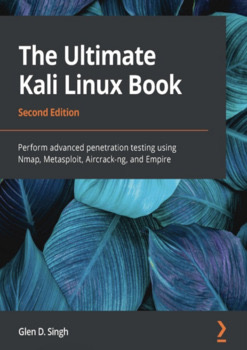
This is precisely the mindset The Ultimate Kali Linux Book (Second Edition) instills. Rather than throwing a massive directory of tools at the reader and hoping something sticks, Glen D. Singh masterfully orchestras a structured, professional penetration testing methodology from reconnaissance to post-exploitation.
The Foundation
The early chapters are brilliant inside their scope, ensuring that the reader isn’t simply running tools blindly. Glen covers the Offensive Security methodology framework, mapping Nmap and preliminary OSINT tightly to actionable attack surfaces.
Unlike theoretical guides, you’re immediately thrust into configuring a viable home lab ecosystem, complete with vulnerable Active Directory environments which are essential for modern corporate network testing.
Advanced Weaponization
What separates this book from beginner documentation is its transition into weaponization:
- Metasploit Framework: A deep dive into custom exploit generation, pivoting through compromised networks using Meterpreter, and evasion technique foundations.
- Wireless Auditing: Comprehensive run-throughs on targeting WPS, WPA/WPA2 handshakes leveraging the
aircrack-ngsuite. - Empire & Post-Exploitation: The introduction to PowerShell Empire provides unparalleled value for operators looking to operate stealthily inside Windows environments after an initial breach, maintaining persistence and evading modern AV heuritsics.
Verdict
For anyone serious about pursuing an OSCP certification or shifting into professional red-teaming, this isn’t just a book—it’s a reference manual. It earns a permanent spot on the desk of any offensive security practitioner. The pacing is spectacular, the examples are fiercely relevant, and the author’s pedigree guarantees every lab scenario translates flawlessly to real-world corporate engagements.