“Stop relying on other people’s websites to do your investigations. Build the infrastructure yourself.”
I used to think being good at Open Source Intelligence (OSINT) meant having the biggest, most organized collection of bookmarks. I hoarded custom search engines, specialized lookup sites, and API wrappers, crossing my fingers every time I ran a query that the site hadn’t been bought out, shut down, or paywalled since last week.
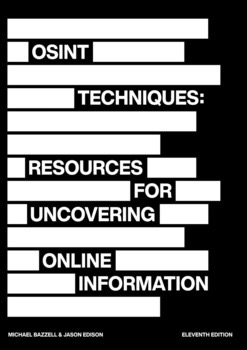
Then I read the 11th Edition of OSINT Techniques, and realized I wasn’t an investigator at all. I was just a tourist relying on someone else’s fragile infrastructure.
The Problem With Modern OSINT
The internet is breaking. The days of easily scraping Facebook, relying on free Twitter API endpoints, or using a simple script to grab an entire Instagram profile are gone. Platforms have spent the last three years aggressively locking down their ecosystems. Most OSINT books published before 2024 are essentially paperweights filled with dead URLs and broken methods.
Michael Bazzell (a former FBI Cyber Crimes investigator) and Jason Edison don’t just acknowledge this reality; they aggressively pivot the entire discipline to survive it. Their answer is brutal but necessary: stop relying on GUIs and start living in the command line.
The Shift in Thinking
The biggest “aha” moment for me was entirely structural. The 11th Edition fundamentally shifts away from saying “Here is a website that checks breaches” to saying “Here is how you securely download terabytes of raw breach data and stealer logs, and here is the custom Python script you will write to grep through it locally in milliseconds.”
The book forces you to abandon the “click-and-pray” methodology. Instead, it guides you through architecting an isolated, hardened custom Linux Virtual Machine (or a dedicated native macOS setup) tailored entirely for intelligence gathering. It teaches you that true OSINT is no longer just “open source”—it’s about acquiring, curating, and indexing your own massive datasets (like stealer logs and ransomware leaks) so you never have to ask a third-party server if a target’s email was compromised. You already have the data locally.
Real-World Relevance
What sticks with me most is how unapologetically technical this edition has become. It doesn’t insult your intelligence.
The section on Stealer Logs and Ransomware Intelligence is a game-changer. Learning how to safely acquire and parse logs dropped by info-stealing malware (like RedLine or Vidar) without contaminating your own OPSEC is something you simply do not find in typical cybersecurity literature.
Equally impactful is the methodology around infrastructure analysis. Panning through historical DNS records, correlating obscure IP ranges, and pivoting through domain ownership histories using strictly command-line tools and direct API calls. Bazzell and Edison provide custom bash aliases and Python scripts that turn a messy, multi-hour manual investigation into a streamlined local workflow.
Who Is This Book REALLY For?
- Professional Intelligence Analysts & Threat Hunters: If your job involves tracking threat actors, attributing ransomware operators, or mapping adversarial infrastructure, this book is non-negotiable.
- Law Enforcement & Private Investigators: The workflows around evidence preservation, chain of custody, and avoiding investigative contamination are written by people who have actually testified in court based on this exact data.
- Red Teamers & Social Engineers: The reconnaissance techniques taught here will allow you to build terrifyingly accurate target profiles before you ever send a phishing email.
Who Is This NOT For?
- The Casual Googler: If you just want to find out who keeps calling your cell phone or do a quick background check on a date, do not buy this book. It is massive, expensive, and requires you to install Linux.
- Those Afraid of the Terminal: There are very few graphical interfaces in this book. If writing a bash script or using
grep,awk, andsedterrifies you, you will hit a brick wall by chapter three. - People Seeking a One-Time Fix: The APIs and methods inside will eventually break. The authors host a private site for buyers to provide script updates, but maintaining the capability is an ongoing, active responsibility.
The Honest Drawbacks
Let’s be clear: this book is exhausting. It is practically a textbook, and the sheer volume of information can be deeply overwhelming. It requires a significant time investment just to set up the baseline virtual machines and configure the custom scripts before you run a single actual search.
Furthermore, maintaining the OPSEC (Operational Security) standards they demand—keeping search traffic isolated, managing burner VoIP numbers, compartmentalizing identities—adds massive friction to daily work. It is easy to get lazy and bypass the safeguards they preach.
The Bottom Line
OSINT Techniques is not a book you read; it’s a curriculum you survive. It forces you to graduate from relying on the internet’s unstable ecosystem to building your own resilient intelligence apparatus.
If you want to know what professional, state-of-the-art online investigation actually looks like in 2026—away from the flashy Hollywood hacking scenes and broken web portals—this is the only book that matters. It will ruthlessly expose the gaps in your technical knowledge, and then systematically show you how to close them.