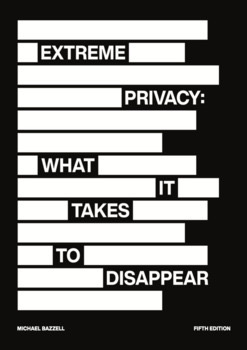
Alright, let’s cut through the noise. In the tech and cybersecurity world, we hear a lot of talk about “privacy” and “security.” We nod our heads, implement some basic MFA, use a VPN, maybe even an encrypted messenger, and tell ourselves we’re doing enough. I thought I understood what it meant to protect myself and my clients, until Michael Bazzell’s Extreme Privacy shook me to my core and showed me just how much I didn’t know about truly disappearing. It’s not just a book; it’s a revelation that completely reshaped my perspective.
This isn’t some academic treatise from a well-meaning but detached professor. Michael Bazzell’s credibility isn’t just about his two decades in law enforcement, including the FBI’s Cyber Crimes Task Force, or his role as a technical advisor for Mr. Robot. His authority comes from being the guy who actually helps people vanish when their lives are on the line—whether it’s a celebrity dealing with extortion, a police officer facing threats, or a victim fleeing an abuser. He’s been living and breathing this stuff, constantly perfecting his methods by testing them on himself first. The real problem this book solves is the relentless, pervasive, and often invisible data collection by virtually every service and device we use, turning our lives into an open book for corporations, governments, and bad actors alike. It’s about confronting the reality that privacy isn’t just being eroded; it’s being systematically dismantled, and if you wait until you need to be private, it’s already too late.
The Shift in Thinking
My biggest “aha!” moment, the one that hit me hardest, was Bazzell’s insistence that “Anonymity is a product of habits, not one tool”. This isn’t about buying one “private email” service and calling it a day. It’s about building a “privacy habit stack” with separate browser profiles, VPN/Tor, aliasing, and burner devices. He illustrates that privacy is a multi-layered, proactive defense, not a reactive cleanup operation.
The detail about how Apple and Google collect extensive data, even from “anonymous” accounts, logging everything from podcast listening habits to IP addresses, was a sobering eye-opener. It drove home the point that factory resets alone are utterly insufficient; if you want true control, you need new, clean hardware and radically different operating systems like GrapheneOS. Another profound insight was the concept of creating a “Shadow Self” to feed misinformation onto platforms you’re no longer using, intentionally muddying the data waters about you. This isn’t just defense; it’s active counter-intelligence for your personal data.
Real-World Relevance
In terms of real-world relevance, this book isn’t just theory. The commitment to GrapheneOS on a Google Pixel device as the optimal mobile solution, because it allows for a completely de-Googled Android experience and a re-locked bootloader for integrity, stuck with me profoundly. It showed me the level of technical control required.
His detailed breakdown of setting up a home firewall with pfSense and a kill switch VPN isn’t for the faint of heart, but it’s a blueprint for protecting an entire household’s internet traffic, including blocking Apple from knowing your true home IP address when connecting your iPhone to Wi-Fi. The stories in the book are particularly impactful, like the client whose past online data led to fraudulent FedEx invoices, or the celebrity who was extorted because her iCloud account was compromised by password reuse and default synchronization. These aren’t hypothetical; they’re stark reminders of the consequences of complacency.
Who Is This Book REALLY For?
- High-Risk Individuals: If you’re a journalist, a government employee, a victim of stalking or abuse, or anyone whose safety depends on obscurity, this is your bible. It provides a roadmap for physical and digital disappearance.
- Privacy Advocates & Practitioners: If you consider yourself serious about privacy and security, this book will push your boundaries and expose you to tactics you likely haven’t considered, even if you don’t implement every single one.
- Anyone Seeking True Data Sovereignty: If you’re fed up with tech giants controlling your digital life and want to reclaim ownership of your data and identity, this offers the most comprehensive path to achieving that.
Who Is This NOT For?
- The Casually Curious: If you just want a few tips to “be more private” online without significant lifestyle changes, this book will likely overwhelm you. It’s incredibly thorough and demanding, often presenting “extreme ideas” that aren’t applicable to everyone.
- The Budget-Conscious: Many solutions involve investing in new hardware, paid services, and legal entities like trusts and LLCs, which can be expensive.
- Those Unwilling to Adapt: Technology and threats evolve constantly. This isn’t a one-and-done solution; it requires continuous learning and adaptation.
- Individuals Seeking to Evade Justice: Bazzell makes it clear this book is not for those trying to hide from the US Marshals or skip prison sentences; they will find you.
The Honest Drawbacks
The honest drawbacks are that the sheer depth can be overwhelming. It demands a significant investment of time, effort, and often money. The information, especially around specific tools and configurations, can become outdated rapidly due to the pace of technological change. And while it’s exceptional for personal privacy, a piece of me resonates with the “surveillance gap” argument: that too much involuntary privacy, or invisibility, can be as injurious as too little, especially for marginalized communities who rely on societal recognition for services and protection. Bazzell’s clients choose invisibility; for others, it’s a systemic problem.
The Bottom Line
Extreme Privacy isn’t just a book; it’s a masterclass in personal operational security from someone who has lived it. It’s a pragmatic, no-holds-barred playbook for reclaiming control of your identity in an increasingly surveilled world.
If you’re serious about privacy, if you want to understand what it truly takes to protect yourself and your loved ones, you need to read this book. It will change the way you think about every digital interaction and empower you to build a resilient, private life.